
Introduction
Technology has changed everything in our lives and healthcare is not different. One of the interesting new things in recent years is wearable technology. These smart devices that you wear on your body help people check their health all the time and give information about how their body is doing. From smart watches and fitness trackers to medical wearable these tools are making healthcare more personal, more about preventing problems and easier to get.
The number of people around the world who want wearable health technology is increasing fast because more people are thinking about their health there are ideas, from artificial intelligence the Internet of Things is getting better and more people have long-term health issues. These wearable devices not help people stay healthy but also let doctors watch over patients from far away which makes healthcare better and cheaper.
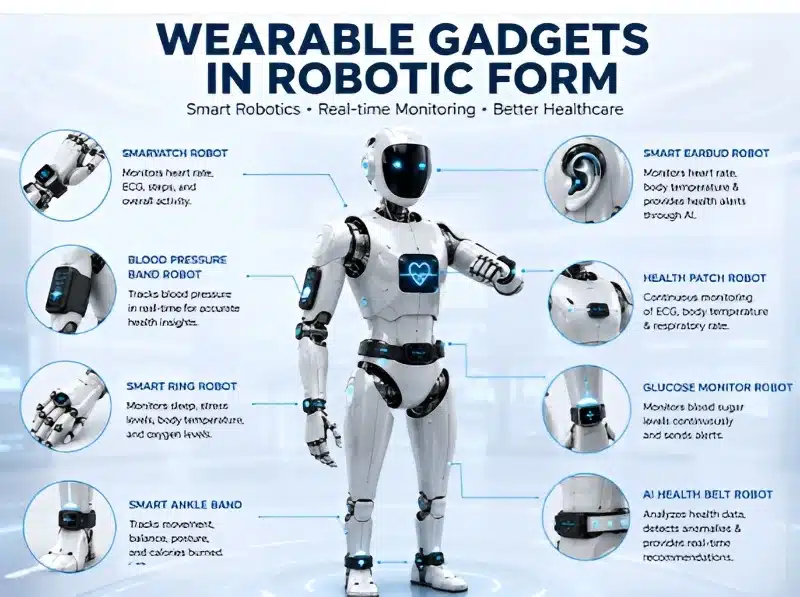
What is Wearable Technology?
Wearable technology is basically gadgets that you wear on your body. These gadgets collect information look at it and send it to your smartphone or some online storage place.
They do this with the help of sensors. Wearable technology includes things like:
- Smart watches
- Fitness trackers
- Smart rings
- Smart glasses
- ECG monitoring devices
- Continuous glucose monitors, which are also known as CGMs
- Clothes with sensors built into them
- Wearable blood pressure monitors
They can also check the quality of your sleep your body temperature, how stressed you are and the number of calories you burn.
📚 Read Also
How Wearable Technology Works
Wearable devices have sensors that are always collecting information about our bodies. This information is looked at by the software and artificial intelligence in the device before it is shown to us on our phones or on websites.
The basic way it works is:
- The sensors in the devices collect information about our health.
- The wearable device looks at this information.
- The information is sent to our phone or to a place on the internet.
- We and the people who take care of us get to see reports and warnings about our health.
Applications of Wearable Technology in Healthcare
1. Fitness and Wellness Monitoring
Fitness trackers help people keep healthy by keeping track of:
- Daily steps
- Calories burned
- Distance travelled
- Exercise duration
- Heart rate
- Sleep patterns
These details encourage people to move and reach their fitness goals.
2. Remote Patient Monitoring
Wearables make it possible for doctors to check on patients from away.
People with long-term health conditions like:
- Diabetes
- Hypertension
- Heart disease
- Asthma
It can send health information automatically to doctors. This means trips to the hospital and better care all the time.
3. Heart Health Monitoring
New smart watches can do ECG readings. Find unusual heartbeats like atrial fibrillation.
Early discovery helps doctors act quickly and lowers the chance of heart problems.
4. Diabetes Management
Continuous Glucose Monitoring (CGM) tools check blood sugar levels all day without needing to prick the finger.
People get warnings when sugar levels are too high or too low which helps them manage diabetes better.
5. Sleep Tracking
Sleep is very important, for health.
Wearables keep track of:
- Sleep time
- Deep sleep
- REM sleep
- Sleep breaks
- Breathing habits
People can make sleep habits using this information.
They also offer breathing exercises, meditation time and ways to relax to help with mental health.
Benefits of Wearable Healthcare Technology
- Early Disease Detection
- Preventive Healthcare
- Personalized Healthcare
- Improved Patient Engagement
- Remote Healthcare
- Reduced Healthcare Costs
- Better Chronic Disease Management
Future Trends in Wearable Healthcare
The future of wearable healthcare is incredibly promising.
1. Artificial Intelligence Integration
AI will improve disease prediction by identifying health risks before symptoms appear.
2. Smart Clothing
Clothing embedded with sensors will monitor vital signs continuously without additional devices.
3. Digital Twins
Healthcare providers may use wearable data to create virtual health models for personalized treatment planning.
4. Flexible Biosensors
Thin, skin-like sensors will provide more comfortable and accurate health monitoring.
5. Wearable Drug Delivery
Future devices may automatically deliver medications such as insulin when required.
6. 5G Connectivity
Faster networks will enable real-time transmission of health information with minimal delays.
The Role of Artificial Intelligence and Internet of Things, in Wearable Healthcare
- Artificial Intelligence and Internet of Things are changing the way we use healthcare devices.
- Artificial Intelligence looks at a lot of health information to find things that are not easy to see and to predict health problems that might happen.
- Internet of Things helps wearable devices talk to smartphones and hospitals and healthcare providers and cloud platforms easily.
- Artificial Intelligence and Internet of Things work together to make a healthcare system where people can get medical help faster and it is smarter and just for them the Artificial Intelligence and Internet of Things make this happen.
Impact on the Healthcare Industry
Wearable technology is changing healthcare in ways:
- Better communication between patients and doctors.
- Fewer times patients have to go to the hospital.
- Efficient work in healthcare services.
- More focus on keeping people healthy before they get sick.
- Better. Virtual visits, with doctors.
- Reliable health records because data is collected in real time.
Frequently Asked Questions (FAQs)
1. What is technology in healthcare?
Wearable technology is about devices that you wear on your body to check your health. These devices can check things like your heart rate, blood oxygen how well you sleep how much you move around and other important health things.
2. What are the benefits of healthcare devices?
These devices are really helpful because they can check your health all the time help find health problems early give you care and let doctors check on you from far away. They also help prevent health problems and make it easier to manage long-term health issues.
3. How does AI improve healthcare devices?
AI looks at the health information that wearable devices collect finds patterns and can even predict if you might have a health problem. It also gives you personalized health information. Warns you if something is wrong.
4. Are healthcare devices accurate?
A lot of devices give you good health information that you can use every day. But you should not just rely on these devices. You should still go see a doctor to get an opinion and use their equipment to check your health.
5. What is the future of technology in healthcare?
In the future wearable technology in healthcare will include things, like using AI to predict health problems making clothes that can check your health creating flexible sensors that can check your body and making devices that can give you medicine.
Conclusion
Wearable technology makes health monitoring something that happens every day. It is also more personal. Helps prevent problems before they start. These smart devices give people power over their health. They also help doctors offer care that is based on real information.
From watching how much someone moves each day to helping manage long-term illnesses and checking on patients from away wearable tech is now a must in todays medical world.
There are still problems to solve. People worry about privacy. They want to know if the data from their devices is right. They also care about how much these devices cost and how long the batteries last. Improvements in intelligence, internet of things sensors that read the body and ways to send information are making these devices better. As new ideas come faster wearable tech will do more to help patients. It will also lower costs. Make life better for everyone. The future of medicine is getting more connected. It is becoming smarter. It is all, about helping people live healthier lives.
Author
Ms. Shabna Ali
Assistant Professor, Department of CS & IT
Biyani Group Of Colleges,Jaipur