Use AI, But Do Not Let It Dominate You: Dr. Sanjay Biyani
The four-day 21st Indo-Japan International Conference ‘BICON-2026’, organized at Biyani Group of Colleges, concluded on Wednesday. Two important academic sessions were organized on the concluding day. The first session was conducted by the Department of Social Sciences and Education on the topic “Intelligent Societies: AI Transforming Social Systems, Human Development and Education.” The second session was organized by the Department of Law on the topic “The Future of Law and Governance in the Age of Artificial Intelligence.”
During the sessions, experts shared their views on the impact of AI on society, education, media and law, along with data privacy, cybersecurity, opportunities and challenges associated with artificial intelligence.
The programme began with the ceremonial lighting of the lamp and Ganesh Vandana, followed by the welcome of the guests and expert speakers.
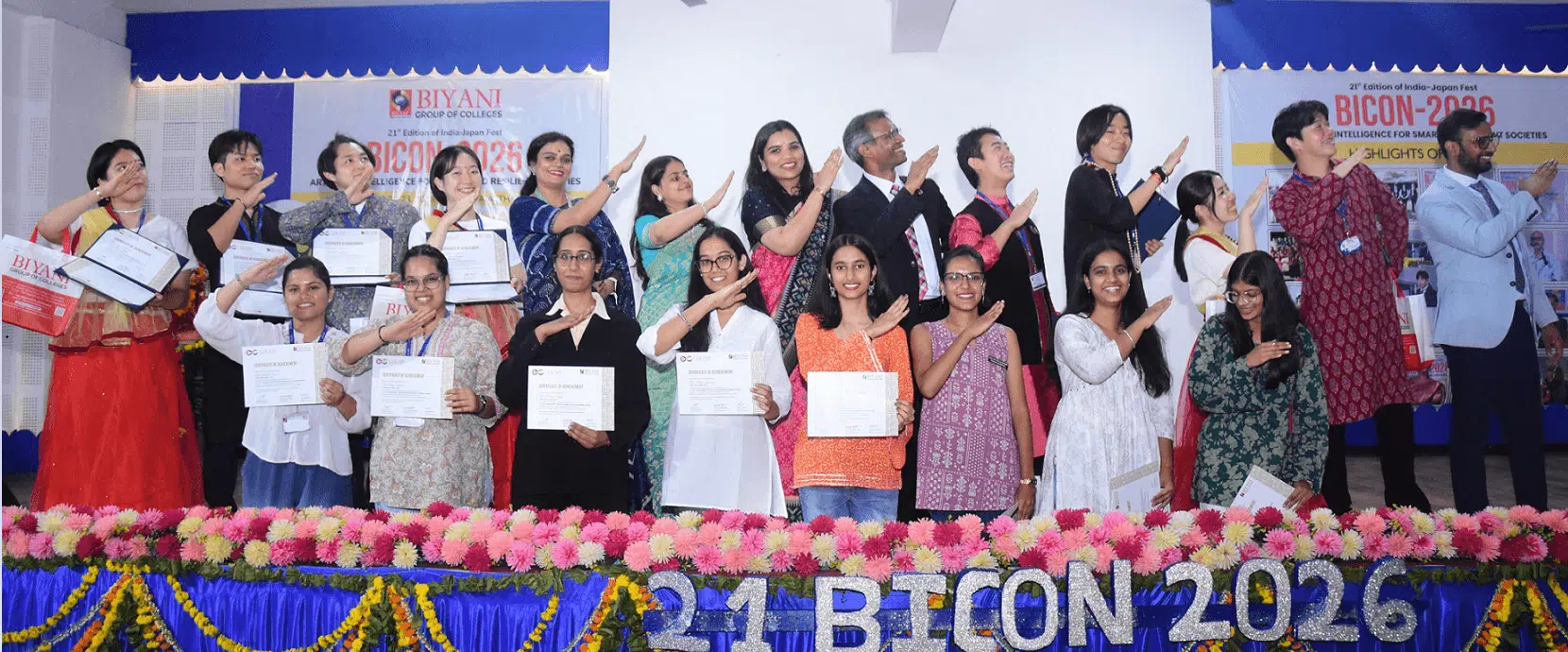
Distinguished Guests at the Concluding Ceremony
The concluding ceremony was attended by Chief Guest Deputy Chief of the Deputy Chief Minister Hanuman Singh Shekhawat, Sameer Sharma from the Higher Education Department of the Rajasthan Secretariat, Distinguished Guests Prof. Baba from Ishikawa Prefectural University, Prof. Kyo and Naveen from Osaka College of Tourism and Business, Dr. Lee and Dr. Yaho, along with Organizing Chairman Dr. Rajiv Biyani, Director Dr. Sanjay Biyani, and Dean and Principal Dr. Dhyan Singh Gothwal.
Deputy Chief of the Deputy Chief Minister Hanuman Singh Shekhawat said that Biyani College has been organizing such programmes from time to time, which is a commendable initiative. Such events provide an opportunity to share information related to the education and culture of different countries and to understand one another better. He congratulated Biyani College for successfully organizing the event.
Sameer Sharma from the Higher Education Department of the Rajasthan Secretariat said that India guided the world for nearly 1,700 years on the strength of its knowledge and rich traditions. Today’s young generation possesses the capacity for ideas, vision and innovation. If provided with appropriate resources and government support, young people can move forward and make a significant contribution towards taking India’s knowledge-based economy to new heights.
In this context, Japanese students who came to India under the Gulabi Programme shared their experiences of their stay in India with everyone. The students expressed their thoughts about Indian culture, traditions and the emotional connection they experienced here. They also delighted the audience with a captivating performance of Rajasthani folk dance.
International Education and Career Opportunities
During the ceremony, Conference Organizing Chair and Director (Research and Development) Prof. Dr. Manish Biyani informed students of Education and Law about career opportunities available in Japan . He explained in detail the study, training and employment opportunities available under the OCTB–Biyani T2C (Training to Career) Joint Education and Job Programme. He also apprised students of international learning and growth opportunities through the Gulabi Programme and Sakura Science Programme. Along with this, he encouraged students to use their knowledge and skills to contribute to the development of the country.
Use AI, but do not let AI use you.
— Dr. Sanjay Biyani
College Academic Director Dr. Sanjay Biyani, in his welcome address, said that instead of giving only lectures for motivation, students should be given small weekly goals and practical activities. Goals should be set every Monday and reviewed on Friday, which would help increase confidence and efficiency. He advised students to learn the proper use of AI tools and use ChatGPT for questions related to their careers and learning. He said, “Life changes by doing, not just by understanding.” He encouraged faculty members to prepare interesting projects and motivated students to learn from Japan’s education and work culture. He said that every Biyani student should become a leader and take initiative to move forward in life.
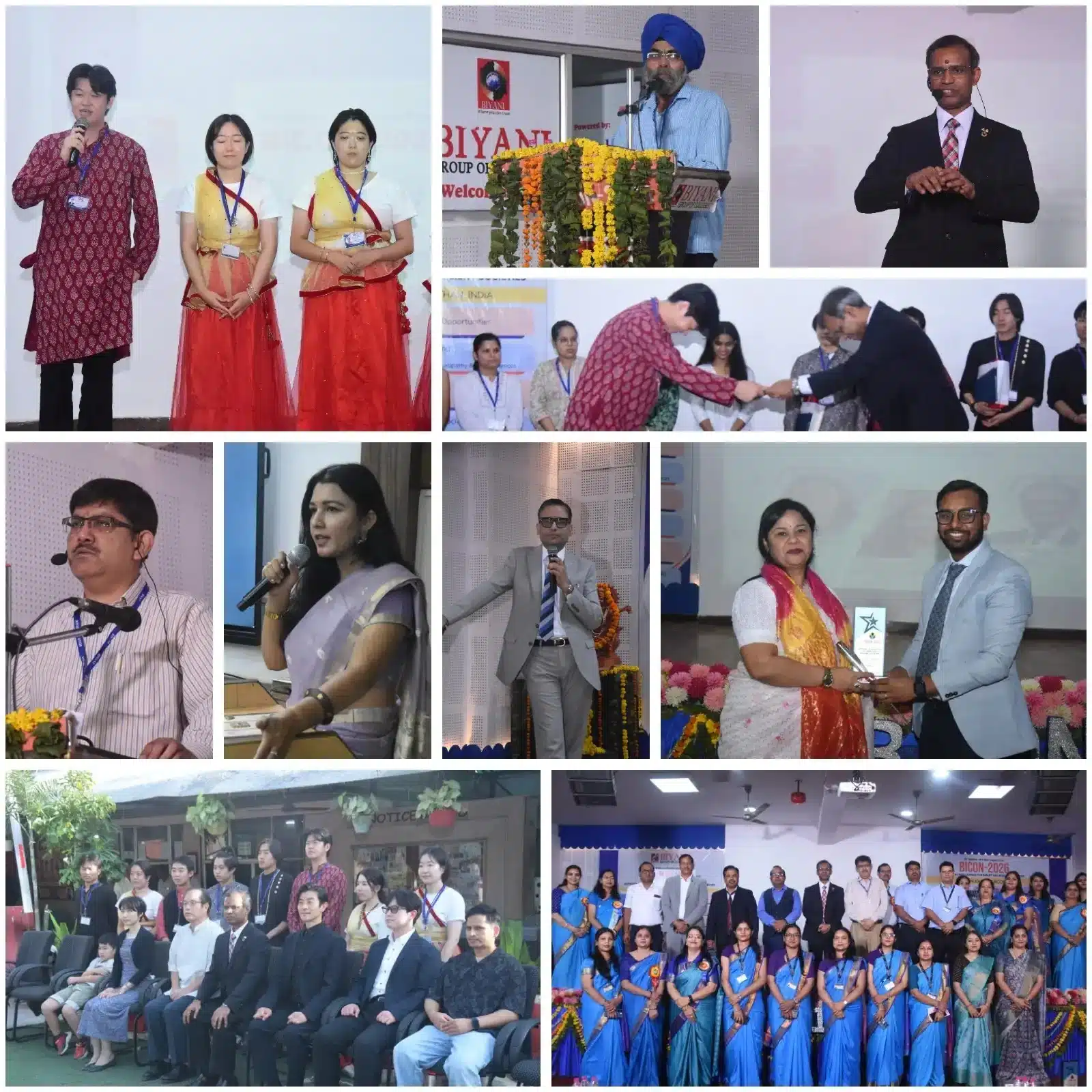
Expert Views on AI, Ethics and Innovation
During the technical session, Prof. Dinesh Chahal of Central University of Haryana said that AI marks the beginning of a new era. Young people should maintain control and restraint along with using AI correctly. While exploring new income opportunities through AI, it is also important to pay attention to values, ethics and responsibility.
Prof. Ajay Surana of Banasthali Vidyapith said that the education sector has undergone several changes after the COVID-19 pandemic. The emergence of AI has brought new challenges, and therefore teachers need to move forward with innovation. He also shared suggestions regarding the impact and challenges of AI and possible solutions.
Prof. Dr. Inderjeet Singh Sodhi from Jamia Millia Islamia, New Delhi, said that there is a lack of effective AI tools in areas such as agriculture, traffic management and rural management. He emphasized the development of accessible and useful AI solutions for these sectors.
Dr. Chander Kanwar Palawat, Nodal Officer from Shiksha Sankul, Jaipur, shared his views on education, administration and social issues.
This was followed by an oral presentation session, in which researchers presented their research papers and engaged in discussions during the question-and-answer session.
📚 Read Also
Law, Governance, Privacy and Cybersecurity
At the beginning of the Law and Governance session, Prof. Dr. Saroj Sharma Bohra of Presidency University, Bengaluru, said that AI is helpful in the field of law and justice, but the final decision will always be made by humans. She emphasized the proper and responsible use of AI in digital evidence and cyber law.
Dr. Shilpa Rao Rastogi from VGU discussed cyber challenges and privacy concerns associated with the increasing use of AI. Referring to incidents such as digital arrest scams, she emphasized the importance of protecting personal data and using AI responsibly.
Advocate Prateek Kasliwal, Founder of Law Desk, said that with the increasing use of AI, challenges such as data privacy, deepfakes, monitoring, discrimination and misinformation are also growing. He said that clear legal frameworks are necessary to ensure transparency and accountability in AI-based decision-making.
Conclusion
At the end, Assistant Director Dr. Radhika Biyani Daga presented the report of the programme and expressed her gratitude to all the guests, speakers and participants. The conference concluded with the national anthem.
With its conclusion, BICON-2026 conveyed the message that the future of AI is not limited to technology alone, but also lies in its balanced and responsible use in education, society, law and human life.