

Have you ever thought where the beautiful colours in clothing, paintings, and packaged food come from? Some colours are artificial, but many are natural. These are referred to as organic colours or natural colours. People have been getting colours from natural sources (Plants and insects) for many years. Nature can safely use these colours. These days, using organic dyes is a contemporary and environmentally friendly way to use these naturally occurring colours.
People now understand that artificial colours can harm nature, so they are using natural colours again. But what are natural colours, and why are they important today? If you’re interested in eco-friendly science and sustainable practices, explore our B.Sc Courses
Naturals colours are important to us for several reasons. Some are-
Non-toxic, ecofriendly, healthier, using renewable resources, and preserving traditional knowledge. Organic colours are recyclable, eco-friendly, and typically safe for people, in contrast to chemical-derived colours, which are made primarily petroleum and may leave dangerous residues.
Importance of Natural Colours
This is due to the fact that a lot of artificial colours contain chemicals that could be harmful to the environment.
- Eco-friendly
Synthetic dyes are a major source of contamination in the agriculture and fabric industries. In contrast, natural dyes break down easily in the environment and generate less chemical waste.
- Safe for Skin and Health
Since colours that are naturally occurring typically have no negative effects, they can be used in cosmetics, products that are natural, and baby clothes.
- 3. Lower Water Toxicity
Water sources are frequently contaminated with dangerous substances by chemical dyes.
- Growing Demand for Green Products
Natural colours are becoming more and more popular in the clothing and cosmetics industries as customer demands for green goods increase.
- Eco-friendly
Sources of Organic Dyes
- Plant-Based Dyes
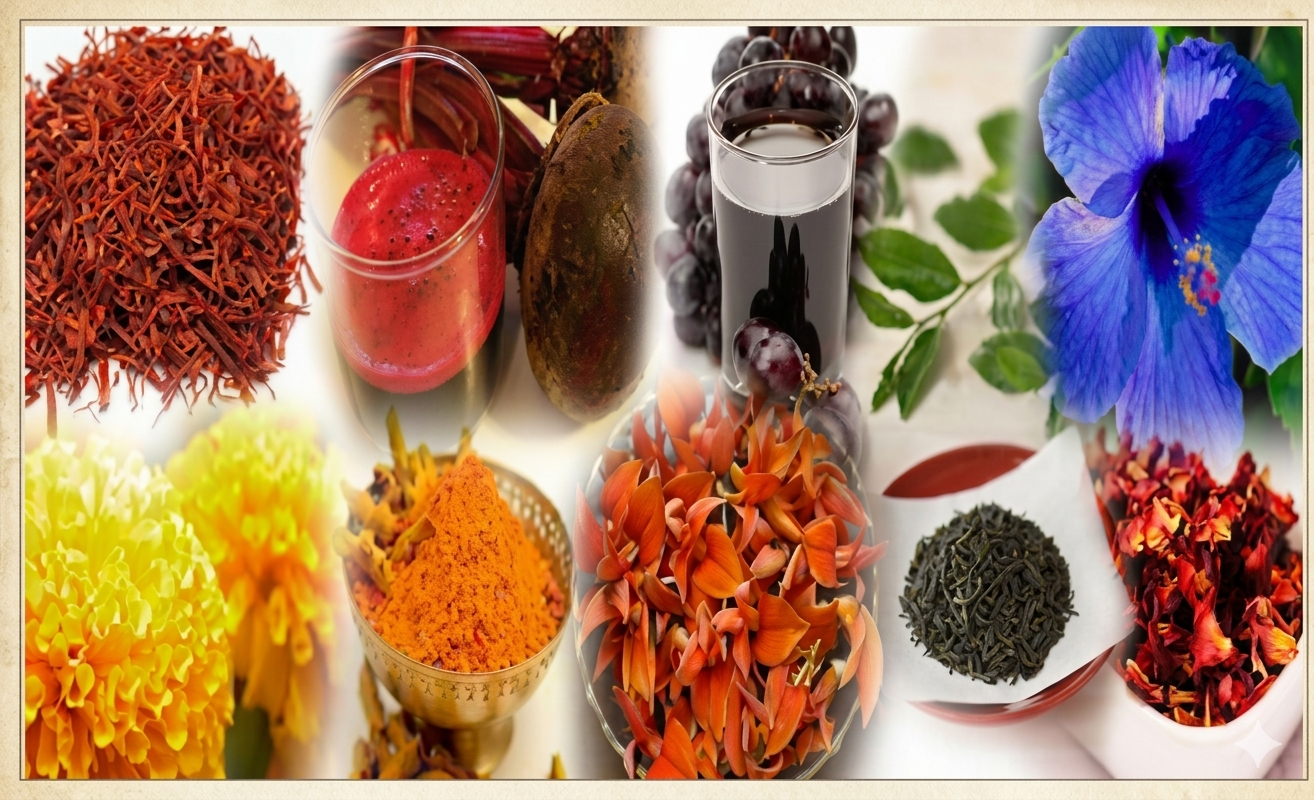
Plants are the largest source:
Blue – Indigo
Red – Madder root, beet
Yellow – Turmeric, marigold
Brown – Walnut shells
Green – Spinach extract
- Plant-Based Dyes
2. Animal-Based Dyes
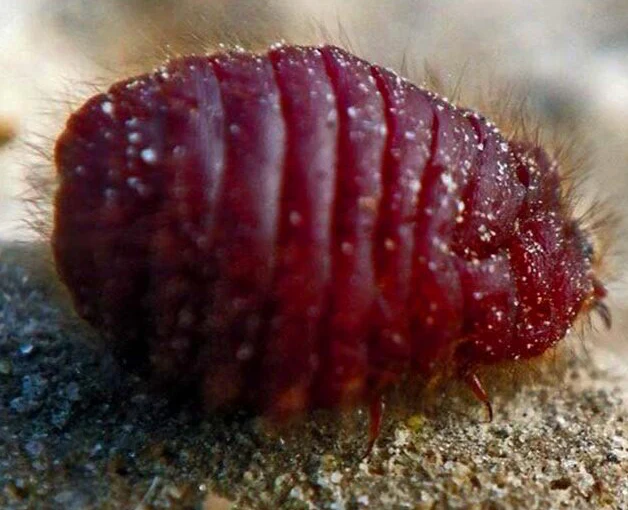
Cochineal (deep red)
3. Microbial Dyes
Algae, bacteria, and fungi all are modified to produce bright and consistent colours.
How They work?
The colour of natural dyes is produced by chemical groups known as chromophores. Light interacts with these groupings. They reflect some light wavelengths while absorbing others. Everything appears as colour is the reflected light.
Uses of Natural Dyes
Textiles
Food colouring
Cosmetics
Paper and Leather dyeing
Biological stains
Challenges of Natural colours
Natural colours are very valuable, but they do have certain disadvantages.
• The colour can disappear fast after washing or being exposed to sunlight for a long period of time.
• There are fewer colour options than with synthetic dyes.
Why Making natural colorants can be more expensive.
• Growing plants for dye manufacture requires a lot of area.
Conclusion
Natural dyes are colours people used long ago. Today, people want to protect nature, so natural colours are becoming popular again. These colours used in paintings, clothes, and beauty products. Natural colours show us how we can use nature and still protect it.
Frequently Asked Questions (FAQs)
Q.1. Why are organic colours important?
Ans: They are safer and environmentally friendly.
Q.2. What are the sources of natural colour.
Ans: Flower, leaves and fruit
Author
Dr. Smita Sisodiya
Assistant Professor, Department Of Science