
Prosopis Cineraria
Khejri is known for its survival in very crucial Environment that is the reason it is called “THE WONDER TREE”. It is also mentioned as our “STATE TREE” (Rajasthan).
Khejri or Ghaf is a drought tolerant plant. It is help in Nitrogen fixation. It is the Native tree to arid regions of the Indian subcontinent and Arabian Peninsula. It is valued for its ecological, cultural and economic importance.
Botanical Description of the Plant
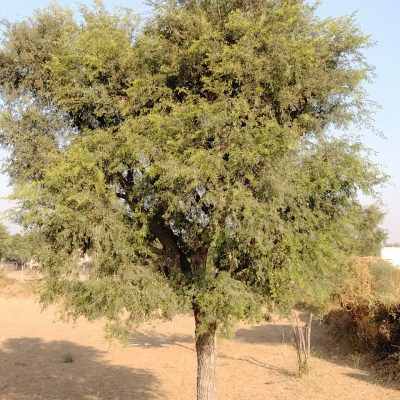
Khejri is a small to medium size tree. Normally it has 10-12 meters height and have a crown of similar width but in some specific condition it has height of 3-25 meters. Bipinnate leaves are found in this plant and also have 7-14 leaflets per pinna. Small thorns are also present on branches. It has small yellow or creamy pods as fruit in which 10-25 seeds are present. These small pods are also known as “Saangri” when they are green and immature. It has taproot system in which the roots are reach to the depth of 20-25 meters and this is the reason by which this plant survive in unfavourable conditions.
Ecological Significance
Prosopis cineraria grows in arid and semi-arid regions like the Thar Desert. In these places annual rainfall is ranges between 50 -100 mm. Saline and alkaline soil are most suitable for the plant growth and plays a crucial role in preventing desertification, stabilizing sand dunesformation and providing shade and shelter for humans, livestock, and wildlife.This tree is helps in nitrogen fixation, improving soil fertility and supporting agricultural productivity in poor soils.
Khejri tree is highly resilient to the Temperature. It tolerates extreme temperature (5°C to 50°C) and prolonged drought. It is Evergreen plant which produced leaves, flowers and fruits whole year even in peak dry seasons so it is vital for desert ecosystem.
Cultural and Religious Importance
In Hindu culture The Khejri tree have a holy place because it is worshipped during many festivals like Dusshera. In various regions of India it is also known as Shami, Jammi, Khejri, and Jand.
Khejri tree have a sad history also, In 1730 Maharaja of Jodhpur ordered to cut the khejri trees from Khejarli village (which is situated near Jodhpur) for its New Palace. But there is a women Whose name is Amrita Devi Bishnoi, She refused to cut their holy tree so that she stuck with a Khejri tree. Inspired by her 363 other villager which are live there they also stuck with the trees. They all sacrifices their lives for saving their holy Tree. After that Maharaja ordered a ban on cutting trees in Bishnoi villages. This Movement is known as “Chipko Movement” and after that this tree is famous as Rajasthan’s State Tree.
Prosopis cineraria is also the National Tree of UAE because of its cultural heritage and environmental resilience. It symbolizes stability, peace and sustainability in the Desert and it is illegal to cut them especially during dry seasons.
Uses
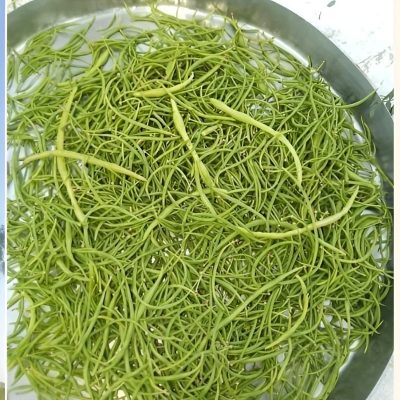
The Khejri tree is used as Fodder. Its leaves, pods and bark are used for livestock and for wild animals. Its leaves, pods and bark are also used to treat ailments such as dysentery, asthma, skin diseases, and eye problems. It is also used for fuel, furniture, fencing, and agricultural implements. Its pods and seeds are used in making bread, biscuits, and other traditional food.
In Indian cuisines “Ker- Saangri” is the most delicious vegetable of Rajasthan and it is eaten from the “Age of Maharajas” and it has a high economic value.
Conservation
Prosopis cineraria is intensively planted in India and the Arabian Peninsula for reforestation, habitat restoration, and desertification management because of its ecological and cultural significance. It is a cornerstone species in arid environments because to its thick roots and resilience. Prosopis cineraria is an example of a multipurpose tree that thrives in some of the most hostile conditions on Earth while supporting biodiversity, human livelihoods, and cultural legacy.
Frequently Asked Questions (FAQs)
Q.1. What role does Khejri play in Indian culture?
Answer: During holidays like Dussehra, Khejri is adored and revered.
Q.2. What significance does the Khejri tree have historically?
Answer:In order to save the Khejri trees in Khejarli village, 363 villagers and Amrita Devi
Bishnoi gave their lives in 1730.
Q.3. What is the Khejri tree used for?
Answer: Khejri is utilized as fuel, wood, medicinal, and feed. Ker Sangri is one of the foods
made using its pods (Saangri).
Q.4. What role does Khejri play in farming?
Answer: By fixing nitrogen, it enhances soil fertility and promotes crop growth even in
unfavorable soil conditions.
Q.5. What makes Khejri crucial to conservation efforts?
Answer: Because it can thrive in harsh conditions and promotes biodiversity, khejri is
planted to prevent desertification and rebuild ecosystems.
Author:
Ms. Monika Saini
Assistant Professor, Department of Science
Biyani group of Colleges,Jaipur