Introduction
Media and politics are two of the most influential institutions in any democracy. In India, the relationship between media and political power has evolved significantly since independence. The media serves as a bridge between the government and citizens, informing the public about policies, political developments, and social issues. At the same time, political leaders rely on media platforms to communicate with voters, shape public opinion, and build political support.
The relationship between media and political power in India is both cooperative and contentious. While the media plays a crucial role in holding governments accountable, political actors often seek to influence media narratives to strengthen their position. The growth of television news, digital media, and social media has further transformed this relationship, creating new opportunities and challenges for Indian democracy.
Understanding this dynamic is essential because a healthy democracy depends on both a free press and accountable political leadership.
The Role of Media in a Democracy
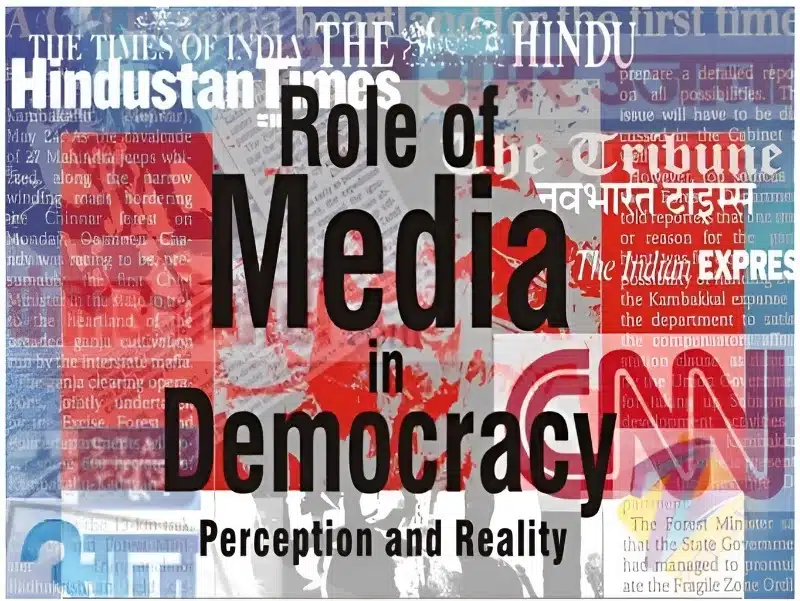
Media is often referred to as the “fourth pillar of democracy” alongside the legislature, executive, and judiciary. Its primary responsibility is to inform citizens, facilitate public debate, and monitor those in power.
In a democratic society, citizens make political decisions based on information available to them. Newspapers, television channels, digital platforms, and social media provide information about government policies, elections, economic developments, and social issues. Through investigative journalism, media organizations can expose corruption, misuse of power, and administrative failures.
A free and independent media therefore strengthens democracy by ensuring transparency and accountability.
📚 Read Also
Evolution of Media in India
The Indian media landscape has undergone remarkable changes over the decades. During the early years after independence, newspapers were the dominant source of political information. Print journalism played a significant role in shaping public opinion and promoting democratic values.
The arrival of television expanded the reach of political communication. News channels brought political debates directly into people’s homes, increasing public awareness of government actions and electoral politics.
The digital revolution transformed the media environment even further. Online news portals, social media platforms, podcasts, and independent digital publications have diversified sources of information. Citizens today can access political content instantly through smartphones and internet platforms.
This technological transformation has increased public participation in political discussions while also changing how political power is exercised.
Media as a Watchdog of Political Power
One of the most important functions of the media is acting as a watchdog over political institutions.
Investigative reporting has exposed numerous cases of corruption, administrative inefficiency, and misuse of authority. Journalists often bring attention to issues that might otherwise remain hidden from public scrutiny. Through reports, interviews, and public debates, the media helps citizens evaluate the performance of political leaders.
This watchdog role is essential because democratic accountability depends on transparency. Governments are more likely to act responsibly when they know their actions are subject to public examination.
Media coverage can also amplify public concerns, forcing policymakers to address issues such as unemployment, inflation, environmental challenges, healthcare, and education.
Political Influence on Media
While the media monitors political power, political actors also seek to influence media institutions.
Governments and political parties understand that controlling narratives can significantly affect public opinion. Political leaders frequently use press conferences, interviews, public campaigns, and social media to shape perceptions about their policies and achievements.
In some cases, concerns arise regarding political pressure on media organizations. Critics argue that political influence can affect editorial independence and reduce the ability of journalists to report objectively.
The relationship between media and political power is therefore often characterized by negotiation and competition. While media seeks access to information and political leaders seek favorable coverage, maintaining editorial independence remains crucial for democratic credibility.
The Rise of Television Politics
Television transformed Indian politics by making political communication more visual and immediate.
Election campaigns increasingly rely on television coverage, debates, interviews, and political advertisements. Political leaders use television to reach millions of voters simultaneously.
However, television news has also faced criticism for sensationalism and excessive focus on political conflict. Competitive pressures sometimes encourage dramatic presentations rather than detailed policy discussions.
Prime-time debates often prioritize confrontation over analysis, potentially contributing to political polarization. While such programs attract viewers, they may not always promote informed democratic dialogue.
The challenge is balancing audience engagement with responsible journalism.
Social Media and Political Power
The emergence of social media has fundamentally changed the relationship between media and politics in India.
Platforms such as Facebook, X (formerly Twitter), Instagram, and YouTube allow political leaders to communicate directly with citizens without relying entirely on traditional media institutions. Political campaigns increasingly use digital strategies to reach specific voter groups and influence public opinion.
Social media has democratized communication by allowing ordinary citizens to participate in political discussions. Individuals can express opinions, organize campaigns, and hold public officials accountable.
However, social media also presents challenges. The rapid spread of misinformation, fake news, and unverified content can distort public understanding of political issues. Information often spreads faster than fact-checking efforts, making it difficult for citizens to distinguish between reliable and unreliable sources.
As a result, digital literacy has become increasingly important in modern democracies.
Media, Elections, and Public Opinion
The influence of media is particularly visible during elections.
Media organizations provide extensive coverage of election campaigns, party manifestos, candidate speeches, and public rallies. Through this coverage, voters gain information necessary to make informed decisions.
Opinion polls, political analysis, and campaign reporting help shape electoral discussions. Political parties invest substantial resources in media strategies because public perception often influences voting behavior.
At the same time, concerns about media bias frequently emerge during election periods. Different political groups may accuse media organizations of favoring particular parties or ideologies. Maintaining fairness and neutrality is therefore a constant challenge.
A credible electoral environment requires media institutions that provide balanced and accurate information to citizens.
Challenges Facing Indian Media
Despite its importance, Indian media faces several challenges.
Commercial Pressures
Many media organizations depend on advertising revenue for financial sustainability. Commercial pressures can influence editorial decisions and encourage content designed primarily to attract audiences rather than inform them.
Political Polarization
Increasing political polarization affects media discourse. Some outlets are perceived as supporting particular ideological positions, leading audiences to consume information that reinforces existing beliefs.
Misinformation and Fake News
The digital age has accelerated the spread of misinformation. False narratives can influence public opinion, deepen social divisions, and undermine trust in democratic institutions.
Safety and Independence of Journalists
Journalists often work under difficult conditions while covering sensitive political issues. Protecting press freedom and ensuring the safety of journalists remain important concerns for democratic societies.
Strengthening the Relationship Between Media and Democracy
For media to contribute positively to democracy, certain principles must be strengthened.
First, media organizations should prioritize accuracy, fairness, and ethical journalism. Responsible reporting builds public trust and improves democratic discourse.
Second, citizens must develop media literacy skills. The ability to evaluate sources, verify information, and identify misinformation is increasingly important in the digital era.
Third, political leaders should respect press freedom and recognize the media’s role in democratic accountability. Constructive engagement between government and media institutions benefits society as a whole.
Finally, independent journalism should be encouraged because diverse viewpoints strengthen democratic debate and prevent the concentration of information power.
Conclusion
The relationship between media and political power in India is complex, dynamic, and essential to the functioning of democracy. Media serves as a watchdog, an information provider, and a platform for public debate, while political leaders use media to communicate policies and mobilize support.
Technological advancements have expanded opportunities for democratic participation, but they have also introduced challenges such as misinformation, polarization, and concerns about media independence. As India continues to evolve politically and technologically, maintaining a balance between media freedom and political accountability will remain crucial.
A strong democracy requires both responsible journalism and transparent governance. When media institutions remain independent and citizens are well-informed, the relationship between media and political power can contribute positively to democratic development, public trust, and national progress.
Frequently Asked Questions (FAQs)
1. Why is the media called the “fourth pillar” of democracy?
The media is called the fourth pillar of democracy because it helps inform citizens, promotes public debate, and holds governments accountable. By reporting on political developments and investigating issues of public interest, the media strengthens transparency and democratic governance.
2. How has social media changed political communication in India?
Social media has enabled political leaders to communicate directly with citizens, expanded public participation in political discussions, and increased the speed at which information spreads. However, it has also contributed to challenges such as misinformation, fake news, and political polarization.
3. What are the biggest challenges facing Indian media today?
Indian media faces challenges including political polarization, commercial pressures, misinformation, concerns about editorial independence, and the need to maintain public trust through accurate and ethical journalism.
Author
Ms. Kanishka Joshi
Assistant Professor, Department of Social Science
Biyani Group of Colleges,Jaipur