What is GULABI?
GULABI, a name that echoes throughout the walled city of Jaipur. GULABI is a name that represents the heritage of Jaipur, but today, it signifies much more.
GULABI, Global Unity Through Learning Art with Biyani, was a collaboration between Japan and the Biyani Group of Colleges, in association with RIICO.
Eight students from four universities came together for a ten-day cultural exchange that created a memorable shared experience. September 13th, 2026, to September 24th, 2026, ten days with young minds in a far land brought together through culture, learning, and passion.
Participating Universities: -
- Ishikawa Prefectural University
- Kwansei Gakuin University
- JAIST, Japan Advanced Institute of Science and Technology
- Saitama University
Participants: -
More Than the Exchange Programme
GULABI wasn’t just about travelling from one country to another; it was also about sharing perspectives.
It was about seeing India through their own eyes, experiencing a perspective that cannot be gained through the internet.
The ten-day experience included exploring Jaipur, interacting with people, exchanging sports, gaining industrial exposure, and staying with Indian families through homestays. The participants also experienced yoga and meditation, visited the desert and marble slurry industries, took part in sports activities, and attended the Biyani International Conference. These experiences showed that it was not just an exchange programme but a strong initiative towards strengthening the Indo-Japanese connection.
Jaipur: Through the Eyes of Japanese Students
Jaipur’s diversity and art made it a unique destination for cultural exchange. For students visiting from Japan, the experience involved discovering different aspects of Indian culture — from food and traditions to art, hospitality, and social interactions. Japanese students saw Jaipur not simply as a place to visit but as a place to observe and experience the kindness and warmth of its people.
Day 1: Exploring The Pink City.
They explored the Pink City, and in their words, they called it:
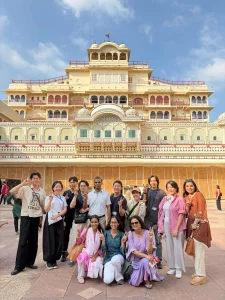
As they visited some of Jaipur’s most famous and recognisable places, including Jal Mahal, Hawa Mahal, City Palace and Albert Hall along with the colourful markets and streets of the city, every glimpse seemed to reveal another story
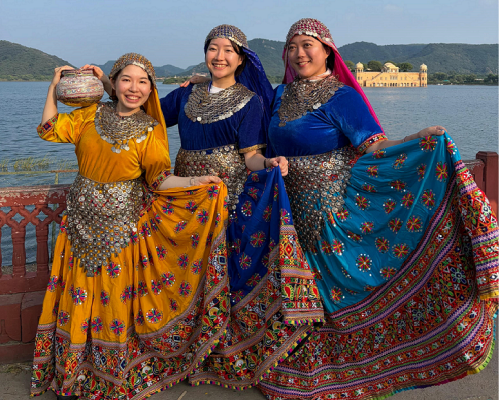
At Jal Mahal, they got to experience Rajasthan a little more personally as they dressed in beautiful Rajasthani traditional outfits — vibrant yellow and blue lehengas. For a moment, they weren't just visitors exploring Jaipur; they became a part of the colours and traditions they had come to discover.
At City Palace, they were very curious about every corner they saw. They raised many questions, surprised to learn that the Prince and the royal family still reside in the palace. And how the royal flags indicate the presence of royal family. When the royal family is in residence, they are flown high. When they are away, the flags lowered slightly down to let the city know they are away.
As they walked through the city, they witnessed monuments, stores, people, art, food and stories, and began to understand how deeply India preserves its culture and heritage. Every temple and historical place gave them a glimpse into how traditions and values are passed down from one generation to another.
What they saw throughout the day was a city that embraces modernity while continuing to preserve, celebrate and live its rich culture and traditions. The students belong to IT, science, research and maths backgrounds, but our culture made them impressively fascinated towards India.
Day 2: Orientation and Homestay
The day began with the students attending the Ganesh Chaturthi Pooja at the Biyani Campus, where they got their first glimpse of how deeply festivals and traditions are woven into everyday life in India.
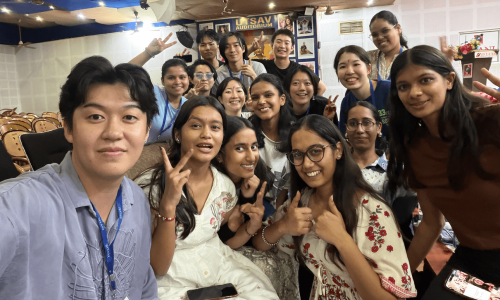
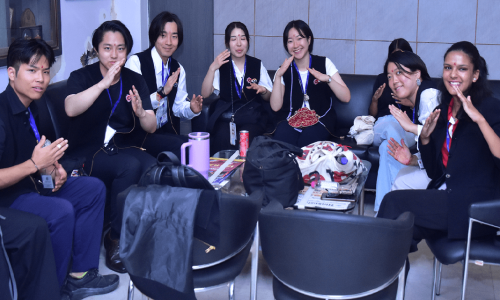
After the pooja, they attended the Orientation Programme, where they introduced themselves, interacted with the faculty and students, and began getting to know the people they would be sharing this cultural experience with.
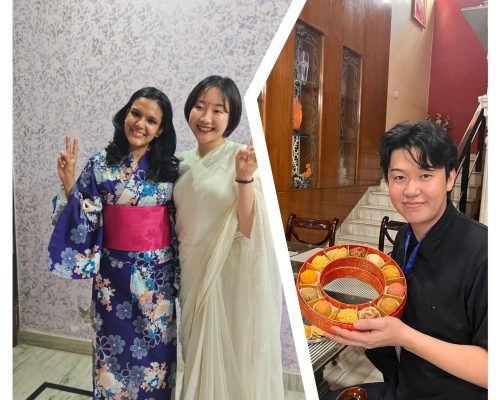
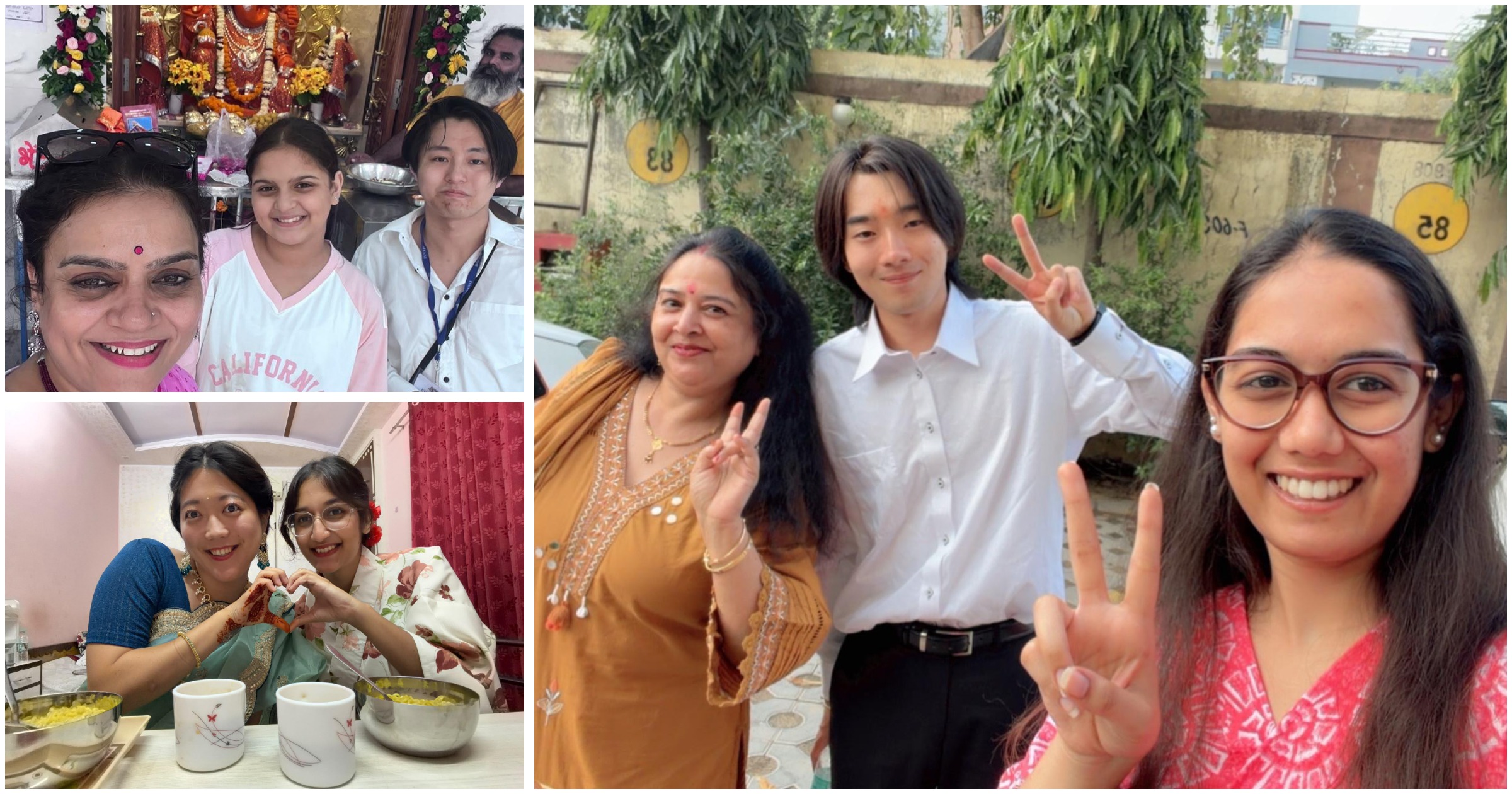
But the most awaited part of the day came at 1 PM — the homestay experience. The students stepped into the homes of Indian students and experienced Rajasthan not as visitors, but as guests. They got to experience Rajasthani cuisine, traditional outfits, customs and everyday family life, while also sharing stories about their own culture. Dal Baati, Churma, Khichdi, and Dosa became some of their favourite foods, they called it “swadisth”, which they would like to taste it happily again.
The Japanese students experienced the warmth of Indian family life as everyone sat together to share meals. They also witnessed family members touching their elders' feet, a traditional practice known as “Charan Sparsh”, each morning to seek their blessings.
The exchange went both ways. They exchanged gifts, shared conversations and laughter, and created little memories that made the experience feel much more personal.
“For them, Jaipur was a city of food and flavours.”
Day 3: Celebrations, Culture & New Connections
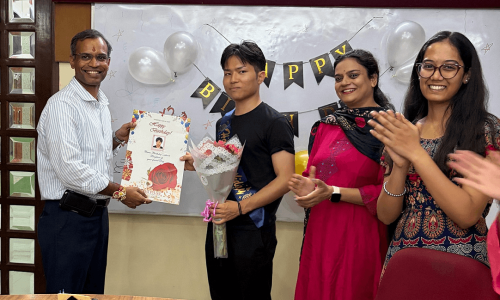
Day 3 began with a special celebration — it was Kosei Emura’s birthday!
His birthday was first marked at Shilpa Ma’am’s home during the homestay, surrounded by warmth, laughter and the people who had made him feel at home.
The celebration continued when everyone returned to the Biyani Campus, where students and faculty joined him."
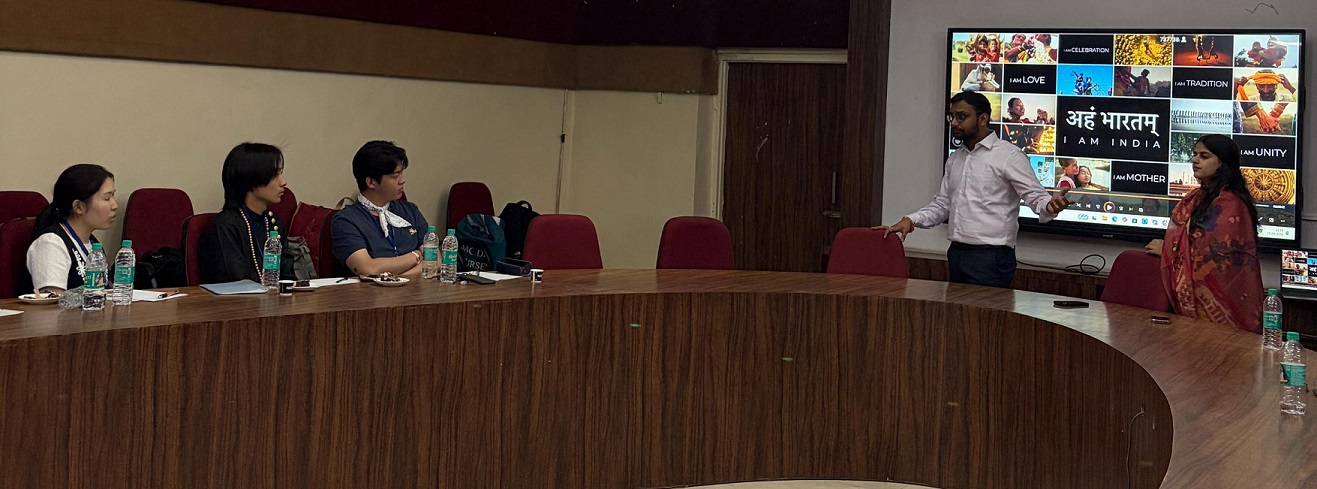
After the celebration, the students attended a session on Indian Culture, Values and Traditions, conducted by CA Abhishek Biyani and CA Sakshi Biyani, which allowed them to look beyond the monuments and festivals they had already experienced and understand the values, traditions and stories that have shaped Indian culture over generations.
The day continued with a session on Basic Communication, conducted by Ms Surbhi. Here, the students learned the basics of communication and even tried introducing themselves in Hindi. They were impressed to discover that Biyani has dedicated Japanese language classes where Japanese is taught to Indian students.
Day 4: A Glimpse Beyond Tourist Trails: Yoga and Dance
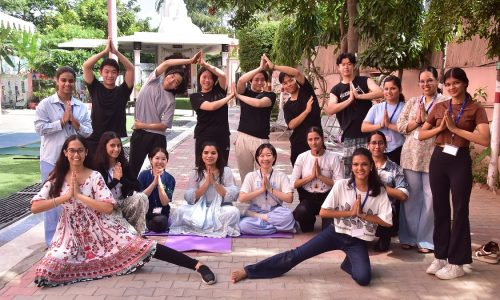
Day 4 began with a session that brought everyone together through movement and mindfulness. The students participated in a Yoga session, where they learned some basic yoga practices and experienced an important part of India’s traditional wellness culture. The Japanese student’s good flexibility made the Aasanas easier for them.
After learning Yoga, the students taught Taichi to the Indian students, turning the session into a beautiful exchange of traditions. One group shared something from their culture, while the other shared something from theirs — and for a while, the language of movement was enough to connect everyone.
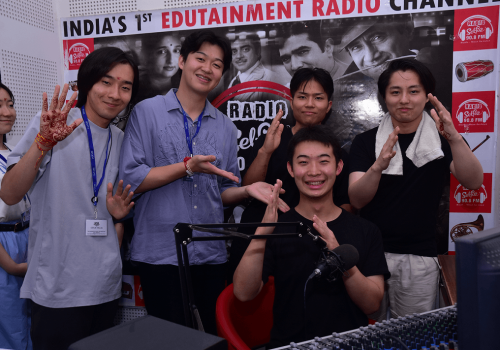
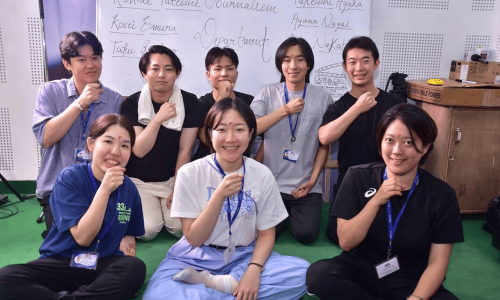
From movement, the students then turned to another form of expression — media and communication. They attended a session on Radio and Biyani TV conducted by Ms Monika Paliwal, where they were introduced to the basics of journalism and learned about the importance of body language and communication. It gave them a glimpse into what happens behind the microphone and camera, and how much communication depends on more than just words.
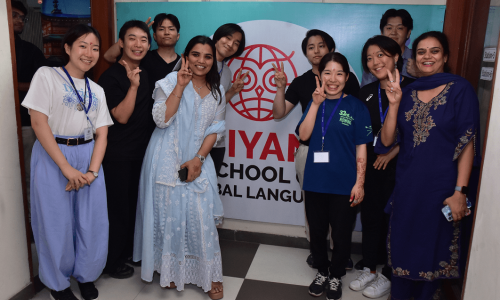
Their language exchange continued as they interacted with students from the Biyani School of Global Languages, communicating in Japanese.
After days of discovering each other's cultures, this interaction gave them yet another opportunity to connect through language.
And then came the most energetic part of the day — dance!.The students first learned the graceful movements of a Rajasthani folk dance on “Boli Pyaari Laage,” experiencing Rajasthan through its music and traditional dance. The mood soon shifted as everyone came together for Punjabi Dance form on “Sauda Khara Khara,” filling the room with energy and laughter. From there, they stepped into Bollywood, learning the iconic moves of “Chaiyya Chaiyya.”
But the cultural exchange came full circle when the students also taught the Indian students “Soranbushi”, their traditional dance. What began as learning each other's dances turned into everyone dancing together — celebrating two cultures through rhythm, music and movement..
And perhaps that was the most beautiful part of the exchange:
They weren't just learning about each other's cultures. They were learning from each other.
Day 5: Together Through Games & Discovery
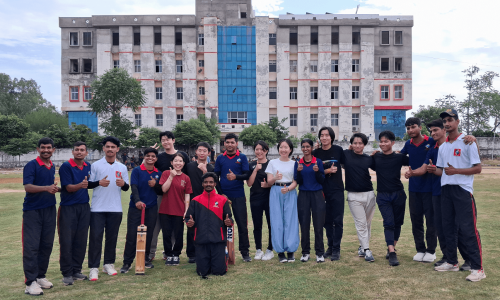
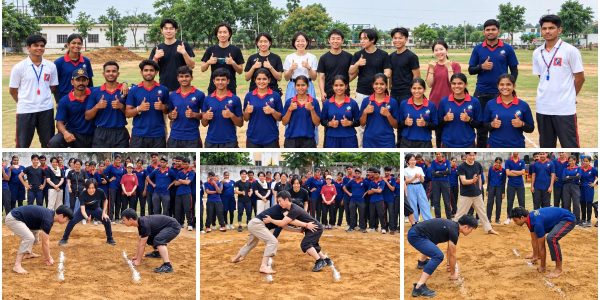
Day 5 began with the students stepping onto the Kalwar Campus, where the day took a lively and energetic turn. The Japanese students joined the Indian students for a game of cricket, experiencing one of India's most loved sports while sharing plenty of laughter and friendly competition along the way. The Japanese girls were especially enthusiastic about cricket bringing extra energy and excitement to the game.
The sporting spirit continued with an exciting game of tug of war, bringing everyone together as teams cheered, competed and encouraged one another. The students also got the chance to experience Sumo wrestling, introducing the Indian students to a traditional Japanese sport and adding another unique element to the cultural exchange. After an energetic morning of games and shared experiences, the afternoon brought a change of pace.
At 4 PM, the students visited Udyog Bhawan for a meeting with RIICO, where they got an opportunity to learn about Rajasthan's industrial landscape and understand a different side of the state beyond its culture, traditions and heritage.
From the excitement of the playground to an insight into Rajasthan's industrial development, Day 5 brought together two very different experiences — the joy of learning through one another and the curiosity to understand the world beyond what we already know.
Day 6: Industrial Visits: Discovering the Craft Behind Rajasthan.
Day 6 took the students beyond the classroom and into the world of Rajasthan’s industries and craftsmanship.
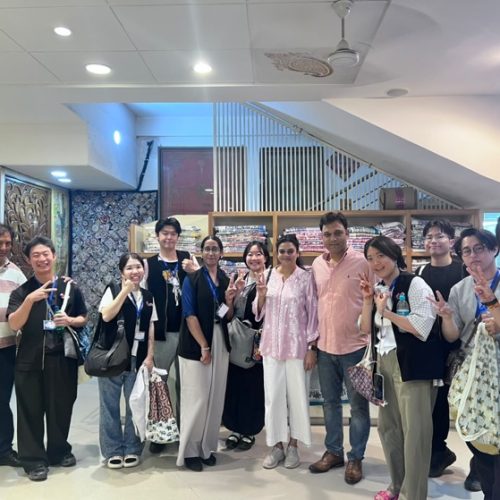
They began by visiting Lehar Industry, where they explored the process of footwear manufacturing. They learned about the time and effort involved in making a pair, the different stages of production, and how the final cost is calculated.
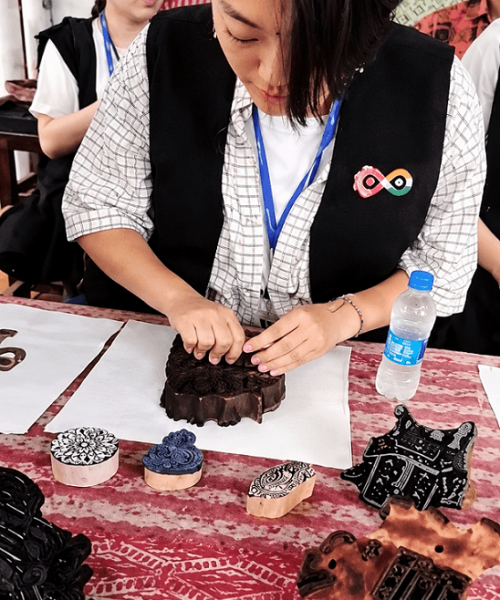
From there, they visited Paliwal Industry, where they were introduced to the traditional art of block printing. But this time, they didn’t just watch — they tried it themselves. With blocks, colours and fabric in front of them, the students got hands-on experience with this beautiful craft and created their own prints.
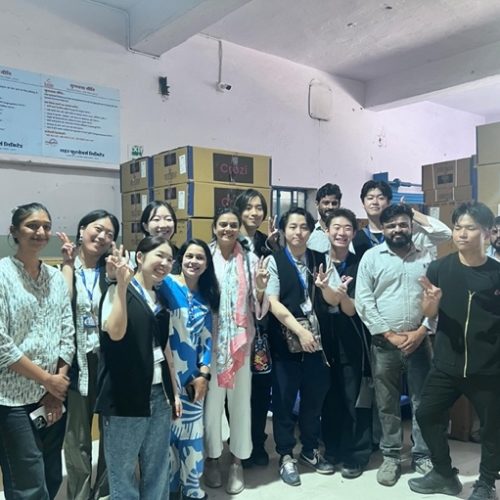
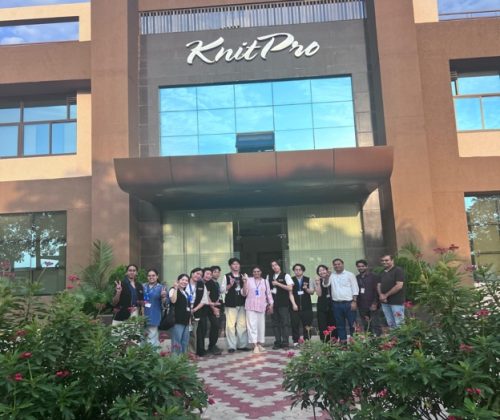
They also took home a piece of their art, a handkerchief made by them. The day then continued with a visit to KnitPro and Mahindra SEZ, where they explored how the crochet and needles are being made and the another side of Rajasthan — its growing industrial and business landscape.
From traditional craftsmanship to modern industry, Day 6 showed them how Rajasthan carries its heritage forward while continuing to grow and evolve.
Day 7: A Day of Culture, Colour & Adventure
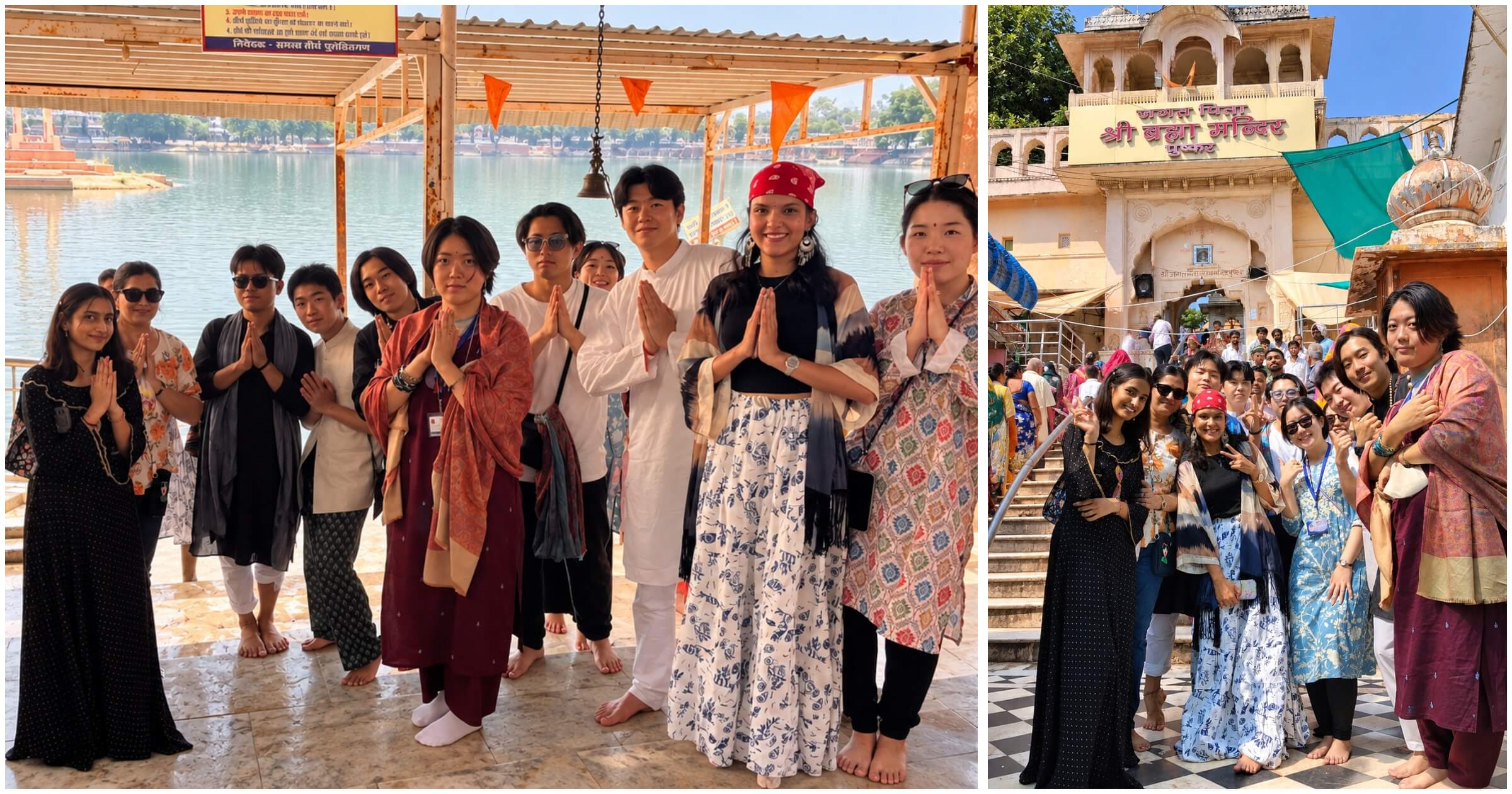
Day 7 took the students to Pushkar, where they began their day with a visit to the Brahma Temple and a pooja by the sacred Pushkar Lake
It was a peaceful experience that gave them another glimpse into India’s spiritual traditions.
From spirituality, they moved into the colourful streets of Pushkar. They explored the local markets, picking up souvenirs such as safas, earrings and bangles, taking little pieces of Rajasthan back with them.
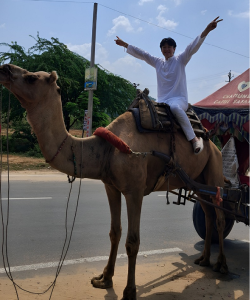
The adventure continued with a one-hour camel ride, giving the students a chance to experience the desert landscape in a way they had never experienced before.
Their journey then took them to RK Marbles, one of the major marble companies, where they explored the marble industry and enjoyed lunch.
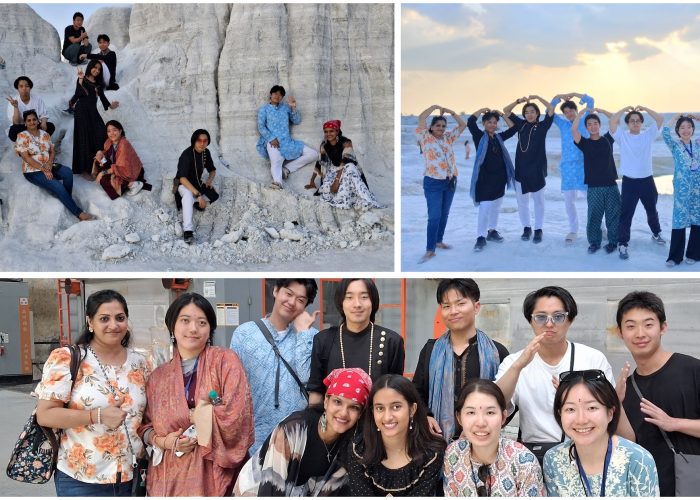
From Pushkar, they travelled to Kishangarh, where they visited the unique Marble Slurry Snow Yard. They came to understand how better a waste management system could be. Surrounded by the striking white landscape, the students couldn't resist turning the moment into a memory of their own — creating a reel on “Chaiyya Chaiyya”
From temples and markets to camels, marble, and music, Day 7 brought together the many colours of Rajasthan in one unforgettable day.
Day 8: A Little Bit of Home, A Lot of Togetherness
Day 8 began with the students attending the BICON Orientation Programme, where they got to know more about the institution and the opportunities it offers. The day came to a warm close with a dinner at Biyani House, bringing the students and faculty together for an evening of food, conversations and laughter.
The evening became even more special when the Japanese students sang “Doraemon” in Japanese, followed by the Indian students singing the Indian version of the song. Hearing the same familiar tune in two different languages turned into a small but beautiful moment of cultural exchange.
Sometimes, it is the simplest moments—a shared song, a shared meal and a lot of laughter — that bring people from different cultures closer.
Day 9: Little Pieces of Jaipur to Take Home
Day 9 began with the students attending BICON during the first half of the day, before heading out for lunch and a little shopping. Their next stop was Bapu Bazaar, where the colourful streets and local shops offered them the perfect opportunity to take home a few memories of Jaipur.
They bought traditional mojris, Indian keychains, handmade notebooks, silver bangles and earrings as little souvenirs that would remind them of their time in Rajasthan long after the exchange ended.
From traditional crafts to everyday keepsakes, their shopping trip became another way of taking a little piece of Jaipur home with them.
Day 10: Practising, Playing & Making Memories.
Day 10 began with another session of BICON, which kept the students engaged through the first half of the day. The afternoon then shifted towards preparation as the students began practicing their dance performance for the closing ceremony. With the big day approaching, the practice sessions were filled with energy, coordination and plenty of moments of laughter
Meanwhile, three of the Japanese students — Kohki Inokuchi, Takeuchi Ayaka and Kana Nakatsuka — had a different sporting experience. They went to play pickleball with Abhishek Sir, where they also had the opportunity to meet a national-level pickleball player.
And the day wasn't over yet. After dinner, the students joined the Indian students for a game of badminton, ending the day with friendly competition and plenty of fun.From rehearsing for the closing ceremony to discovering a new sport and playing badminton together, Day 10 was another reminder that some of the best memories are made when everyone simply comes together.
Day 11: A Beautiful Goodbye
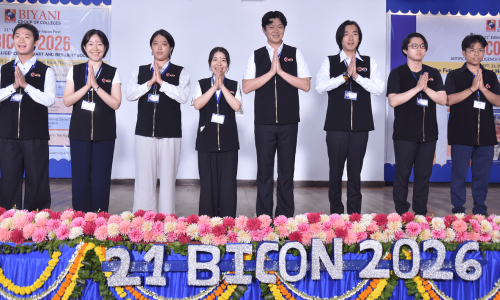
Day 11 began with the students attending BICON, before the day slowly turned into something much more special — the closing ceremony.
Before the celebrations began, the students attended a Mehndi session, where they had beautiful mehndi designs applied to their hands. It was another opportunity to experience one of India's most loved traditional art forms.
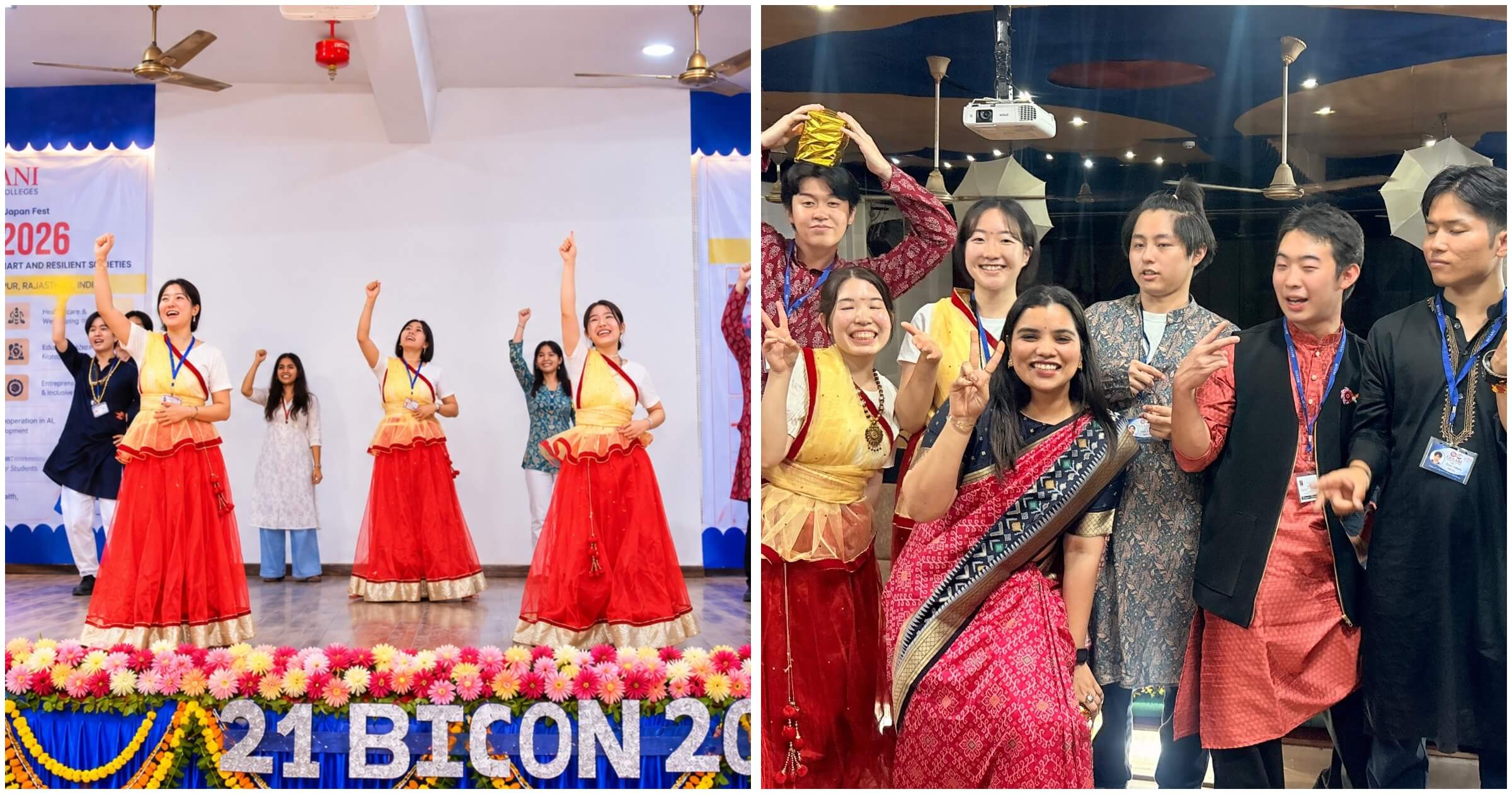
Soon after, everyone got ready for the closing ceremony in traditional Indian attire. The girls dressed in beautiful red lehengas, while the boys wore kurtas, bringing the evening to life with the colours and elegance of Indian culture.
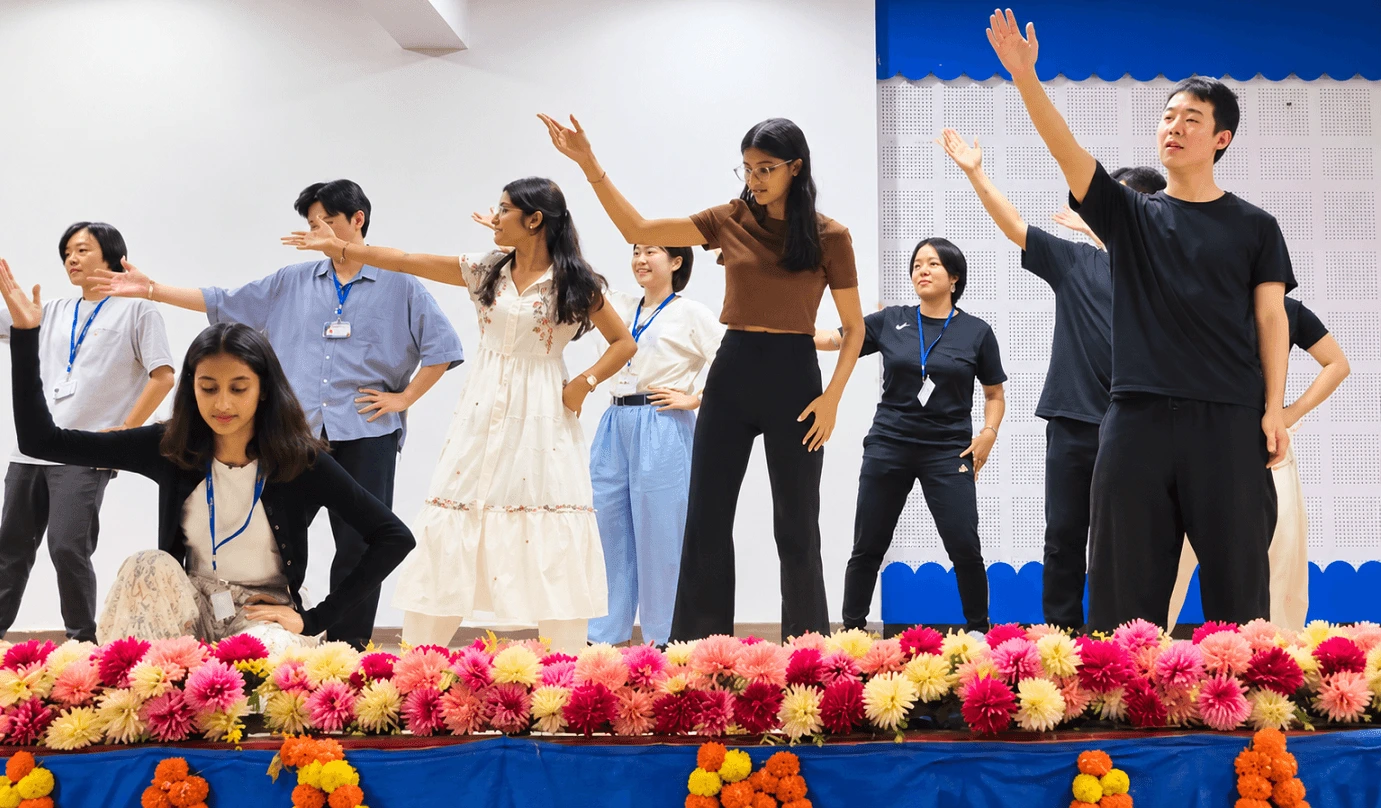
Then came the moment they had been preparing for — their dance performance. After days of learning and practicing together, they finally performed on stage, bringing together everything they had experienced throughout the exchange.
Following the performance, the Japanese students shared a few words about their experience in India. What began as a simple sharing of memories soon became an emotional moment, as they spoke about the people they had met, the experiences they had shared, and the memories they would be taking back home.
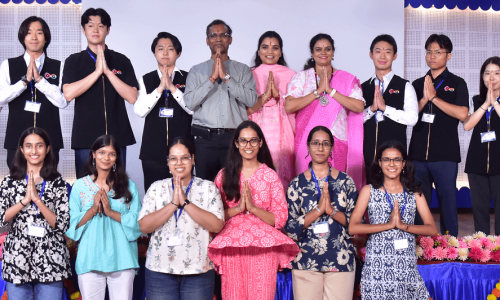
The certificate ceremony followed, with the Japanese students receiving their certificates first, followed by the volunteers who had been part of their journey. And just like that, the formal part of the exchange came to an end. But there was still one more evening to spend together.
That night, everyone gathered for a pizza party, sharing one last meal, conversation, and laughter before the Japanese students left for their home country the following day. After eleven days of learning, exploring, dancing, playing and sharing cultures, the goodbye felt a little heavier. Because sometimes, the people who were strangers at the beginning of a journey become the hardest to say goodbye to at the end.