

Overview
Digestion is one of the most crucial and essential physiological processes in any living organism, including the human body. Every day, we consume a variety of foods containing fats, proteins, carbohydrates, vitamins, and minerals in complex forms that cannot be directly absorbed by blood cells. The human physiological system converts these complex substances into simpler forms through compounds known as digestive enzymes.
Digestive enzymes act as biological catalysts that control chemical reactions in the digestive system without being consumed in the process. These compounds perform their function from the intake of food in the mouth until the excretion of waste, including absorption in the intestine, converting complex food into absorbable nutrients.
Since these enzymes are biologically formed, they enhance biochemical reactions in both forward and backward directions without losing their identity or structure.
Humans consume complex food compounds such as proteins, fibers, carbohydrates, and fats that are too large to enter the bloodstream directly. Digestive enzymes break them into simpler forms:
- Carbohydrates → Glucose
- Proteins → Amino Acids
- Lipids → Fatty Acids and Glycerol
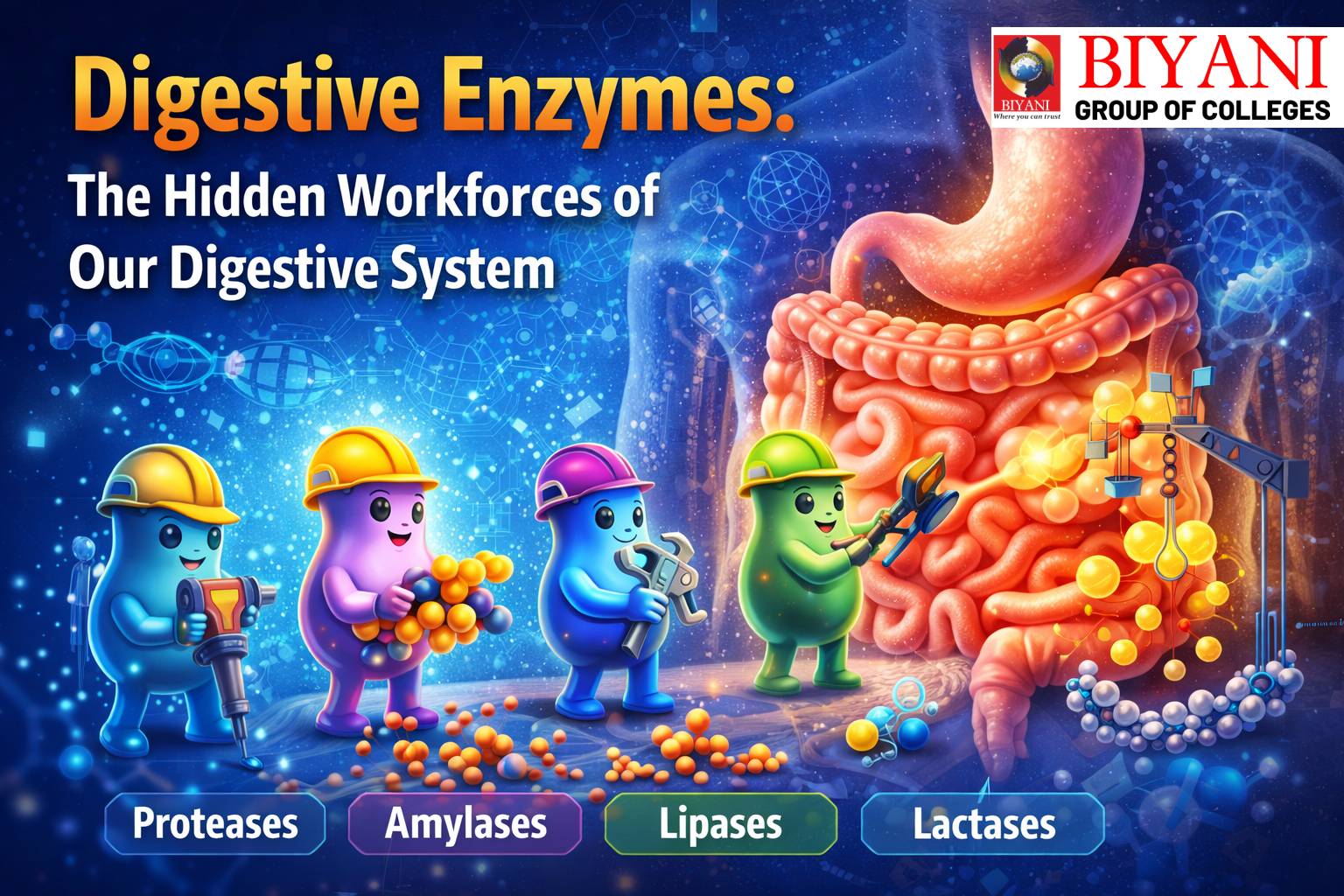
Kinds of Digestive Enzymes and Their Roles
- Enzymes that Break Down Carbohydrates
Carbohydrates are the primary source of energy in our diet. Digestion of carbohydrates begins in the mouth. Salivary amylase (ptyalin), secreted by salivary glands, breaks starch into maltose and dextrin. Remaining starch is further digested in the small intestine by pancreatic amylase.
Carbohydrates such as glucose, fructose, and galactose are converted into simpler forms called monosaccharides and disaccharides with the help of enzymes like lactase, sucrase, and maltase (gut enzymes). These simple sugars are absorbed into the bloodstream to produce energy.
- Enzymes that Break Down Proteins (Proteases)
Proteins are composed of amino acids. Protein digestion begins in the stomach where pepsin breaks proteins into peptides. Pepsin remains inactive as pepsinogen and becomes active in the presence of hydrochloric acid.
Further digestion occurs through peptidases (intestinal enzymes), which convert peptides into amino acids. These amino acids are absorbed and used for hormone formation, enzyme production, tissue repair, and other vital biological functions.
- Digestive Enzymes for Lipids
Lipids or fats store energy and help in the absorption of fat-soluble vitamins (A, D, E, and K). Lipase is the main enzyme responsible for breaking lipids into fatty acids and glycerol.
Bile salts produced by the liver assist in emulsification, increasing the surface area for lipase action. The resulting fatty acids and glycerol are absorbed through the intestinal lining.
- Enzymes that Break Nucleic Acids
Foods derived from natural sources contain nucleic acids (DNA and RNA). These are broken down by nucleases produced by the pancreas into nucleotides, which serve as energy sources for the body.
Function of Enzymes
The most important theory explaining enzymatic reactions is the Lock and Key Theory. According to this theory, each enzyme has a specific active site where the substrate binds under suitable temperature and pH conditions to form an enzyme-substrate complex.
Factors Affecting Enzyme Activity
- pH: Some enzymes work in alkaline conditions (trypsin), while others function in acidic environments (pepsin).
- Temperature: Enzymes work best at normal human body temperature (37°C). Variations may reduce efficiency.
- Substrate Amount: Enzyme activity increases with substrate concentration until equilibrium is reached.
Importance of Digestive Enzymes
- Essential for proper digestion and nutrient absorption.
- Help in energy production.
- Prevent digestive issues such as gas, bloating, and discomfort.
- Enzyme deficiencies may cause disorders like lactose intolerance and diarrhea.
Digestive enzymes are key components of the digestive system. They transform complex food into simple molecules that the body can absorb efficiently. Their specificity and regulation demonstrate remarkable biological efficiency, supporting growth, repair, and energy balance.
Role of Probiotics in Gut Health
Probiotics improve gut health and digestion. Foods such as yoghurt, kefir, sauerkraut, kimchi, fermented pickles, miso, tempeh, and buttermilk contain beneficial microflora that enhance immunity and promote overall health.
Frequently Asked Questions (FAQs)
Q1. What is the importance of the digestive system?
Ans. The digestive system breaks down complex food into simpler absorbable nutrients necessary for energy and growth.
Q2. Where does most chemical digestion occur?
Most chemical digestion takes place in the small intestine.
Q3. What happens if enzymes do not function properly?
Ans: Improper enzyme function may lead to indigestion, malabsorption, and nutritional deficiencies.
Author:
Dr. Gyanwati Agarwal
Assistant Professor,Department of Science
Biyani Girls College,Jaipur