BICON-2026 Day Two: Intelligent Healthcare, AI and Scientific Innovation in Focus
Jaipur, September 21, 2026: The second day of the four-day 21st Indo-Japan International Conference, BICON-2026, was successfully organised at Biyani Group of Colleges, Jaipur. The day focused on “The Future of Intelligent Healthcare and Scientific Innovation”, bringing together experts, researchers, academicians and students to discuss emerging developments in healthcare, science, medicine and technology.
Traditional Inauguration Marks the Beginning of Day Two
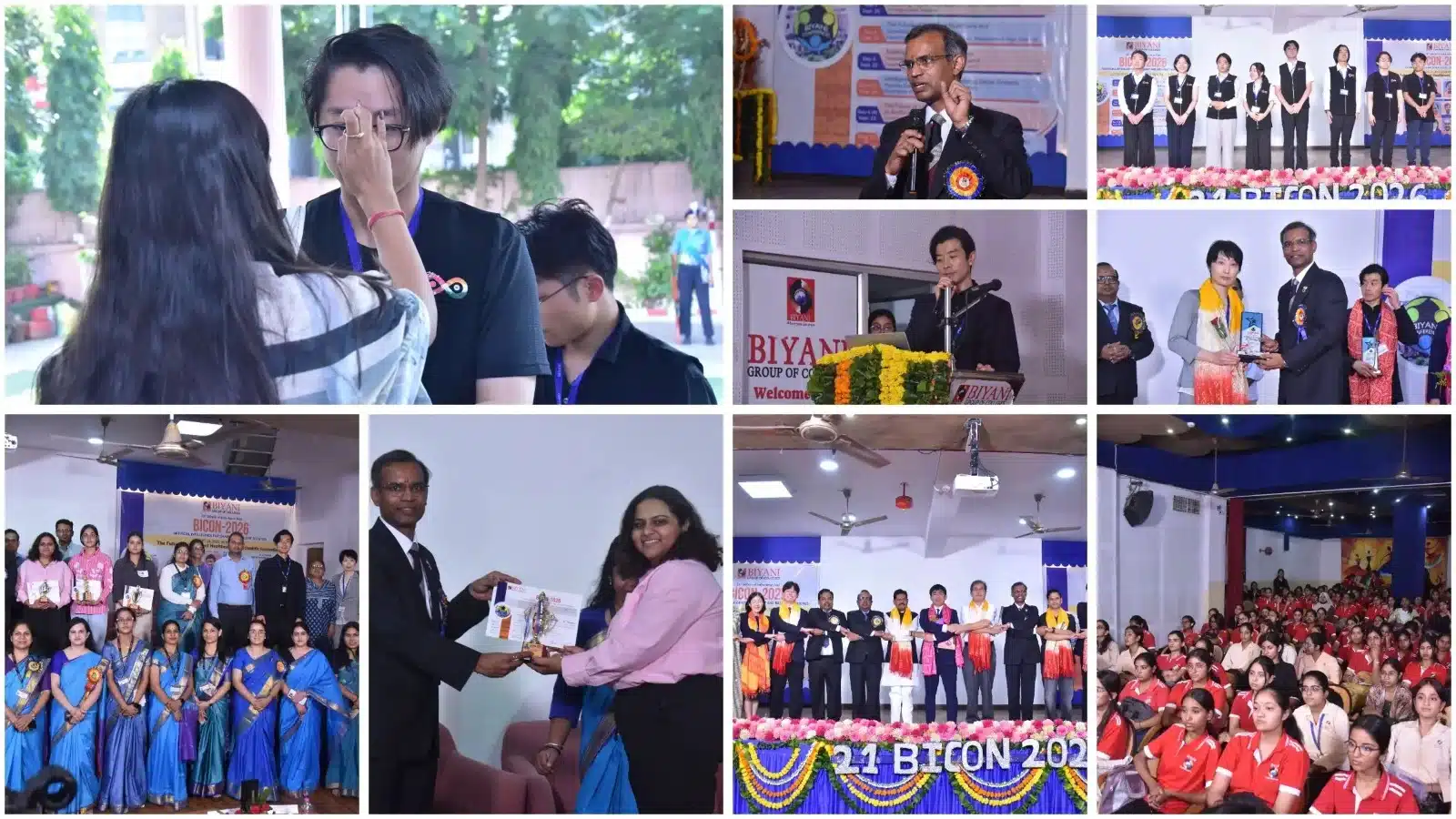
The day’s proceedings began with a ceremonial flag hoisting, lamp lighting and Saraswati Vandana, followed by a traditional welcome for the distinguished guests, speakers and Japanese delegates. The inaugural ceremony reflected the spirit of friendship, academic exchange and cultural cooperation between India and Japan.
The chief guest, Dr. Gopal Sharma, MLA, Civil Lines Assembly Constituency, and the special guest, Mr. Yasuyuki Nakayama, First Secretary, Embassy of Japan in India, were warmly welcomed by Dr. Rajiv Biyani, Chairman; Dr. Sanjay Biyani, Academic Director; Dr. Manish Biyani, Director, Research & Development; Dr. Radhika Biyani, Assistant Director; CA Abhishek Biyani, Assistant Director; CA Sakshi Biyani, Assistant Director; and Dr. Dhyan Singh Gothwal, Principal and Dean. The dignitaries were felicitated with bouquets, shawls and mementoes.
India-Japan Academic Collaboration to Create New Opportunities for Students
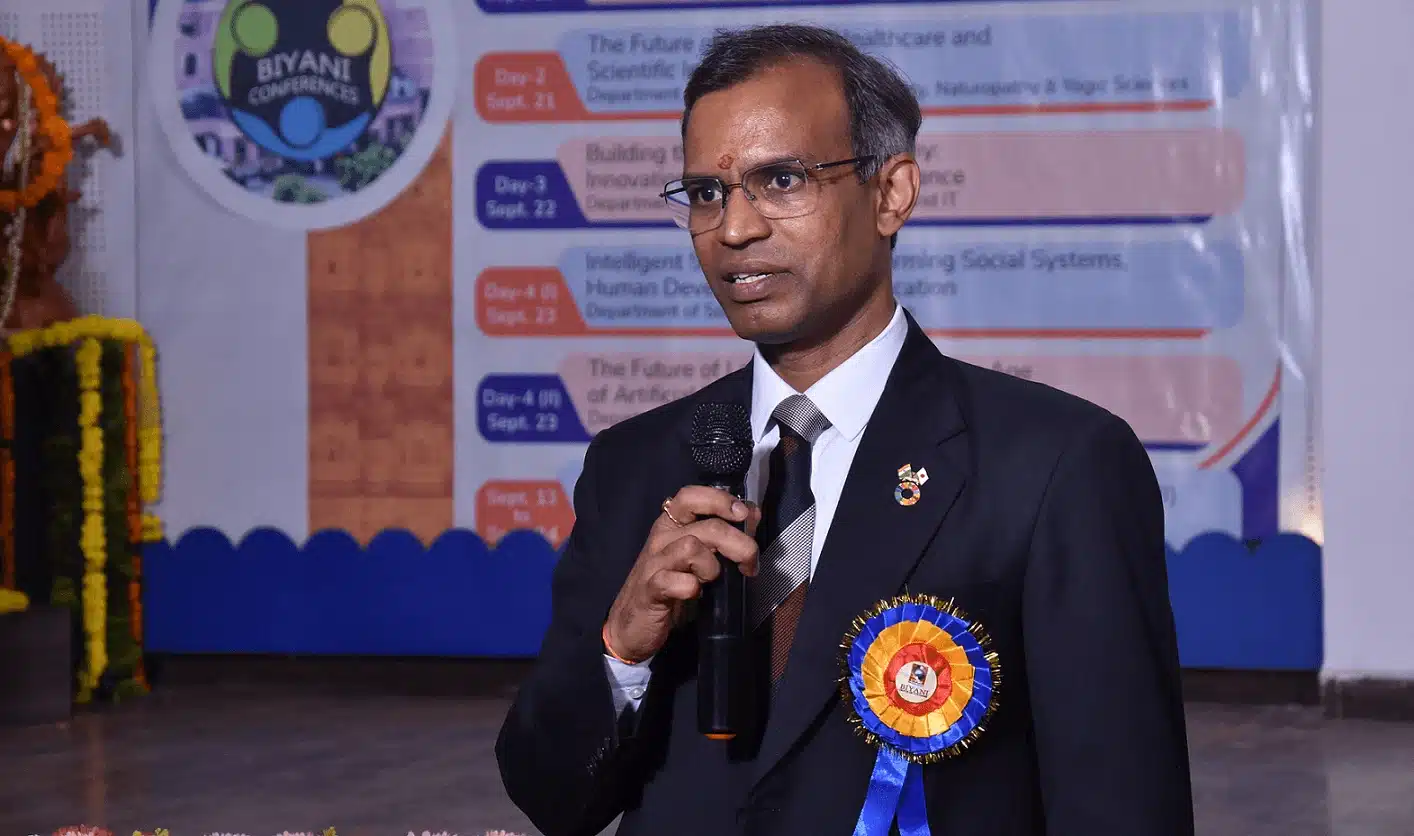
Conference Organising Chair and Director (Research & Development), Professor Dr. Manish Biyani, in his welcome address, highlighted the objective of BICON-2026 to familiarise students with higher education and career opportunities in Japan , employment prospects and work culture in Japan.
He also shared that initiatives are being taken towards an MoU with Osaka University, Japan, with the aim of creating opportunities for students in higher education and future employment. He emphasised the importance of international academic exposure in preparing students for a rapidly changing global environment.
Focus on Growing India-Japan Educational and Cultural Relations
Chief Guest Dr. Gopal Sharma spoke about the growing educational and cultural relations between India and Japan. He highlighted the potential of bilateral cooperation to create new opportunities for students in education and career development. He also welcomed the Japanese delegates and appreciated the efforts of Biyani Group of Colleges to strengthen academic and cultural relations between the two countries.
Mr. Yasuyuki Nakayama, First Secretary, Embassy of Japan in India, spoke about the growing possibilities of cooperation between India and Japan in education, technology and development. He highlighted Japan’s vision of strengthening mutual trust and shared development between the two countries.
He also introduced students to opportunities available through programmes such as the Sakura Programme and JASSO Scholarships. He further discussed the Gulabi Student Exchange Programme , which provides students from both countries with opportunities to understand each other’s culture and strengthen academic connections.
BICON-2026 Souvenir Released; Japanese Students Share Gulabi Experiences
A souvenir release ceremony was organised to mark the 21st edition of BICON-2026. On the occasion, Japanese students participating in the Gulabi Programme-2026 shared their experiences of Indian culture, food, yoga, sports and homestay activities.
The students observed that despite differences in language, sports, communication and cultural exchange helped bring students from India and Japan closer. They also expressed their interest in further strengthening India-Japan relations through language learning and cultural understanding.
Expert Sessions Highlight Emerging Scientific and Healthcare Technologies
Prof. Hidetoshi Sato from the Department of Biomedical Chemistry, Kwansei Gakuin University, Japan, delivered a session on the history, development and future possibilities of Biomedical Raman Spectroscopy. He explained its applications in scientific research and the medical field.
During the invited lecture sessions, Professor Yasunori Baba from Ishikawa Prefectural University discussed cultural similarities between Jaipur and Kanazawa and presented his latest research on sustainable technology and biogas. He explained the potential of rumen methane digesters for producing cooking gas, electricity and liquid fertiliser, while also highlighting the need for research on plant waste in Jaipur.
Prof. Ikuko Yao from Kwansei Gakuin University discussed imaging mass spectrometry and MALDI imaging technology for imaging acetylcholine and related molecules. She explained how these technologies can support the study of neurotransmitters, receptors and enzymes in the brain.
Smart Nursing and the Future of Patient Care
Professor Dr. Rati Balachandran from Dr. Ram Manohar Lohia Hospital College of Nursing, Delhi, spoke about nursing reforms and smart nursing. She discussed the transition from traditional nursing practices towards technology-enabled healthcare and highlighted the role of digital systems, coordination and modern technology in improving patient care.
She also emphasised that technological advancement must be complemented by human understanding, empathy and sound decision-making in nursing practice.
CFD Applications in Engineering and Medical Research
Prof. Dinakaran Shanmugam from the Department of Mechanical Engineering, IIT Indore, explained the use of Computational Fluid Dynamics (CFD) to study airflow, water flow and blood flow. He highlighted applications in aircraft, drones, cooling systems and healthcare.
He also discussed applications related to aneurysms, coronary artery disease, stenting and drug delivery through dry powder inhalers, demonstrating the growing role of computational methods in healthcare and engineering research.
Research on Vehicle Emissions and Air Pollution
Prof. Ghazala Habib from the Department of Civil and Environmental Engineering, IIT Delhi, discussed air pollution caused by heavy-duty vehicles. She explained that emissions of pollutants such as PM2.5, NOx and CO are influenced by factors including vehicle weight, fuel type and maintenance.
She highlighted the importance of studying vehicle emissions under real-world operating conditions to better understand pollution sources and support efforts towards reducing air pollution.
Nanomedicine and Advanced Drug Delivery Systems
Prof. Amit Kumar Goyal from the Central University of Rajasthan, Ajmer, shared insights into nanomedicine and advanced drug delivery systems. He explained how nanotechnology can support more targeted and effective delivery of medicines and vaccines, potentially helping to improve therapeutic outcomes and reduce unwanted side effects.
AI-Based Integrative Medicine and Digital Healthcare
Dr. Sumit Kalra from the Department of Computer Science and Engineering, IIT Jodhpur, discussed AI-based integrative medicine. He presented ideas on the digital transformation of AYUSH and the use of computational intelligence and artificial intelligence to support scientific and evidence-based approaches to Ayurveda and Yoga.
He also highlighted the potential applications of computer vision, machine learning and other emerging technologies in healthcare.
Biomass Utilisation and White-Rot Fungi Research
Prof. Junseok Lee from Ishikawa Prefectural University discussed the role of white-rot fungi in biomass utilisation. He explained that these fungi can effectively break down lignin, making biomass more accessible for further utilisation.
He also shared insights into ongoing research on lignin degradation and its potential applications in sustainable biomass processing.
AI and Machine Learning in Advanced Manufacturing
Dr. Jimmy Karrupiah from the Department of Production and Industrial Engineering, Punjab Engineering College, discussed the use of machine learning and AI in advanced manufacturing.
He explained how continuous technological developments and the adoption of AI and machine learning can help make manufacturing processes more efficient, responsive and effective.
Industry Session and HR Conclave Connect Students with Industry Expectations
An Industry Session and HR Conclave was organised to discuss contemporary issues related to human resources, entrepreneurship, industry requirements and employability. The session was chaired by Dr. Smriti Tiwari, Head, Training & Placement, and moderated by Assistant Professor Kanchan Sharma.
The panel included Tomoko Kato from Naitei Bridge Co., Ltd., Japan; Vivek Chadha from Startupology; Nitin Gupta from Genenest Biotech; Shilpi Mishra from Infinita Biotech; and Arvind Shankar from BASF.
The panellists discussed challenges associated with AI in entrepreneurship, skills required for working with Japanese companies and the changing demands of the Indian market. Students were encouraged to take initiative, learn from failures, develop practical skills and consider learning the Japanese language to expand their career opportunities.
Research Presentations and Award Ceremony
The oral presentation sessions provided researchers with an opportunity to present their research papers. Each presenter was allotted 10 minutes, followed by a question-and-answer session. The session was chaired by Dr. Vishnu Sharma, Research Head, Biyani Girls College, Jaipur.
The day concluded with an award ceremony, during which participants were presented with mementoes in recognition of their participation and contribution to the conference.
Strengthening Indo-Japan Academic Exchange
Concluding the day’s proceedings, Professor Dr. Manish Biyani, Organising Chair and Director (Research & Development), expressed gratitude to all the distinguished guests, speakers, Japanese delegates, participants, principals, faculty members and members of the organising team. The second day of BICON-2026 highlighted the importance of international academic collaboration and interdisciplinary research in addressing emerging challenges in healthcare, science, technology and industry.