
Introduction
For lakhs of NEET aspirants, an exam cancellation feels emotionally devastating. Students spend months — and sometimes years — preparing for one of the most competitive exams in India.
Early morning study sessions, late-night revisions, coaching pressure, mock tests, family expectations, and mental stress become part of daily life. When the exam suddenly gets cancelled or delayed, it can feel like all that hard work has lost direction.
Many students experience confusion, anxiety, frustration, and disappointment after such news. Some feel mentally exhausted because they had already pushed themselves to their limits before the exam day. Others begin doubting their preparation, while social media discussions and rumors create even more panic.
But this situation does not mean your dream is over.
“A cancelled exam is not the end of your dream — it’s an unexpected extra chance.”
This extra time can actually become your biggest advantage. You now have another opportunity to improve weak chapters, increase accuracy, revise NCERT properly, and rebuild confidence before the next attempt. Students who know how to restart quickly often perform better than those who remain stuck in frustration.
This guide will help you create a practical comeback roadmap for NEET 2026 — including mental recovery, smart study strategies, revision plans, mock test approaches, and motivation to help you move forward stronger than before.
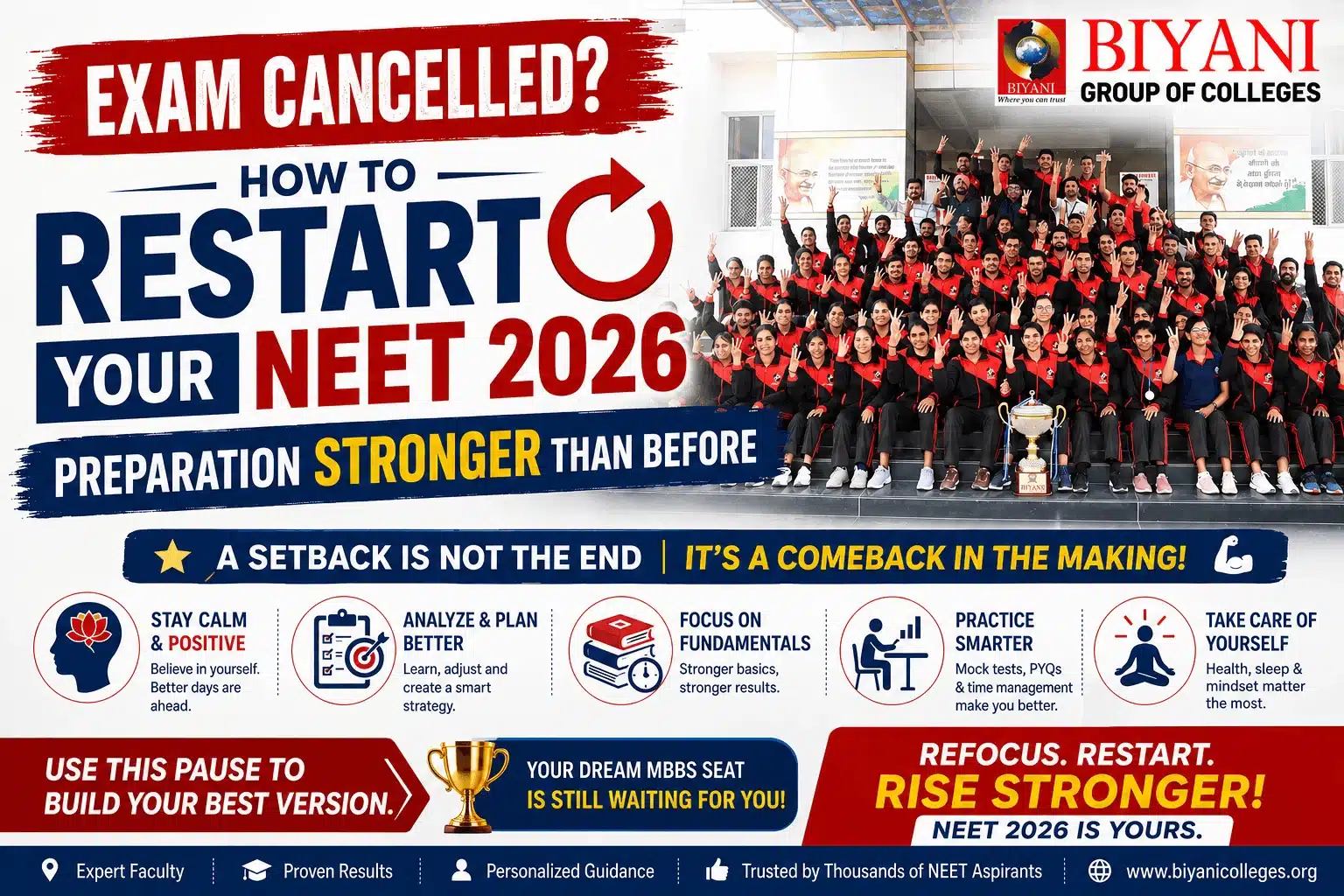
2. Why Exam Cancellation Feels Mentally Exhausting
NEET preparation already demands extreme discipline and emotional strength. When students prepare continuously for months under pressure, their minds and bodies naturally expect closure after the exam. A cancellation interrupts that emotional release, which is why many students suddenly feel drained.
Burnout After Months of Preparation
Most aspirants study for 8–12 hours daily before NEET. Continuous pressure, coaching classes, tests, and revision schedules create mental fatigue. After the exam, students expect rest and relief. But cancellation forces them back into uncertainty immediately.
This emotional burnout is real. Feeling tired or demotivated does not mean you are weak.
Fear of Uncertainty
One of the biggest reasons students feel anxious is uncertainty. Questions like these constantly appear in the mind:
- When will the next exam happen?
- Will the paper difficulty increase?
- What if I forget concepts?
- What if others prepare better now?
Uncertainty creates overthinking, and overthinking destroys focus.
Pressure From Family and Social Media
Relatives asking questions, coaching discussions, YouTube analysis videos, Telegram rumors, and rank prediction posts can make students emotionally unstable. Social media often increases fear instead of reducing it.
Many students start comparing their preparation with toppers online and begin doubting themselves unnecessarily.
Comparing Yourself With Others
One student may feel confident after cancellation, while another may feel broken. Everyone processes pressure differently. Comparing your emotional state or mock scores with others only increases stress.
Remember: NEET is not won by the student who panics the least online. It is won by the student who remains consistent privately.
The important thing now is not what happened — it is how you recover from it.
3. First Step: Take a 24–48 Hour Mental Reset
Before restarting preparation, your mind needs recovery. Many students immediately force themselves back into studies, but mentally exhausted students cannot study efficiently.
Take at least 24–48 hours to reset yourself properly.
Sleep Recovery
Your brain needs proper sleep after weeks of stress. Sleep improves memory retention, concentration, and emotional balance. Do not feel guilty about resting for one or two days.
Avoid Panic Scrolling
Constantly checking social media updates, YouTube debates, or Telegram rumors increases anxiety. Most information online during such situations is repetitive or misleading.
Limit unnecessary screen time.
Light Exercise or Walk
Even a 20–30 minute walk can reduce stress hormones significantly. Light exercise improves mood, focus, and mental clarity.
Talk to Supportive People
Speak with parents, friends, mentors, or someone who understands your situation calmly. Emotional support matters during uncertain phases.
Stay Away From Toxic Discussions
Avoid people who constantly spread negativity, compare marks, or create fear about rankings and competition.
Should I study immediately after NEET cancellation?
Not immediately. A short recovery period helps you restart with better focus and emotional balance.
How to recover mentally after exam stress?
Sleep well, reduce social media exposure, exercise lightly, and slowly return to studies with a realistic schedule instead of extreme pressure.
4. Analyze Your Previous NEET Preparation
Instead of restarting blindly, first analyze your earlier preparation honestly.
What Worked Well
Identify areas where your preparation was already strong.
Strong Subjects
Maybe Biology was your scoring area or Organic Chemistry became consistent during mocks.
Mock Test Performance
Check where you performed well:
- Accuracy
- Time management
- Easy question selection
Revision Habits
If certain revision methods worked effectively, continue using them.
What Needs Improvement
Now identify weaknesses without emotional judgment.
Weak Chapters
Find chapters where concepts remain unclear or accuracy is low.
Time Management
Did you spend too much time on Physics numericals? Did Biology revision get delayed?
Accuracy Issues
Many students lose marks because of silly mistakes rather than lack of knowledge.
Negative Marking
Analyze whether guesswork affected scores.
| Area | Status | Action |
|---|---|---|
| Biology NCERT | Strong | Revise weekly |
| Physics Numericals | Weak | Daily practice |
| Chemistry Organic | Moderate | Concept revision |
This analysis helps you build a smarter comeback plan instead of repeating old mistakes.
5. Build a Smart Re-NEET 2026 Strategy
Now comes the most important step — restarting preparation strategically.
A. Start With NCERT Again
NEET is heavily NCERT-focused, especially for Biology and Chemistry.
Biology
Read NCERT line by line. Focus on diagrams, keywords, tables, and examples.
Chemistry
Strengthen concepts from NCERT before moving to advanced questions.
Physics
Revise formulas daily and practice concept-based numericals consistently.
B. Focus on High-Weightage Chapters
Instead of randomly studying everything together, prioritize scoring chapters.
| Subject | Important Chapters |
|---|---|
| Physics | Modern Physics, Current Electricity |
| Chemistry | Organic Chemistry, Coordination Compounds |
| Biology | Genetics, Human Physiology |
High-weightage preparation improves score potential faster.
C. Mock Test Strategy
Mock tests are essential for rebuilding confidence.
- Start with 1 full-length mock weekly
- Increase frequency gradually
- Analyze mistakes deeply
- Maintain an error notebook
- Focus on accuracy before speed
Students who analyze mocks properly improve faster than students who only give tests repeatedly.
D. Revision Cycle
A good revision system prevents forgetting.
Daily Revision
Quick revision of topics studied the same day.
Weekly Revision
Revise all important concepts from the week.
Monthly Revision
Complete subject-wise revision to strengthen retention.
Consistency matters more than extreme study hours.
6. NEET 2026 Daily Study Timetable
A balanced timetable helps maintain consistency without burnout.
| Time | Activity |
|---|---|
| 6 AM – 8 AM | Biology NCERT |
| 8 AM – 9 AM | Breakfast + Break |
| 9 AM – 12 PM | Physics Practice |
| 12 PM – 2 PM | Lunch + Rest |
| 2 PM – 5 PM | Chemistry |
| 5 PM – 6 PM | Exercise/Walk |
| 6 PM – 9 PM | Mock/Test Analysis |
| 9 PM – 10 PM | Quick Revision |
This schedule can be adjusted according to personal productivity levels.
The goal is not studying all day — the goal is studying consistently every day.
7. Common Mistakes Students Make After Exam Cancellation
Many students lose momentum because of emotional reactions rather than academic problems.
Taking Too Long Breaks
Short recovery is helpful, but extended breaks reduce discipline and confidence.
Watching Too Much Motivational Content
Motivation without action becomes procrastination. Limit excessive motivational videos and focus on actual study hours.
Ignoring Mock Tests
Some students avoid mocks because they fear low scores. But mock tests reveal improvement areas.
Changing Resources Repeatedly
Switching books, coaching notes, or YouTube teachers repeatedly wastes time.
Comparing Scores Online
Online score comparisons create unnecessary stress. Focus on your own progress instead.
8. Best Resources for NEET 2026 Preparation
Using limited and reliable resources is better than collecting too many books.
Biology
- NCERT Biology
- MTG Fingertips
- Previous Year Questions
Physics
- HC Verma
- NEET PYQs
- Formula revision notes
Chemistry
- NCERT Chemistry
- MS Chauhan for Organic Chemistry
- PYQs and mock questions
Remember: revision matters more than resource quantity.
9. Motivation Section: Your Dream Is Still Alive
Every successful NEET aspirant faces setbacks at some stage. Some score poorly in mocks, some lose confidence before exams, and others face unexpected situations like delays or cancellations.
But many toppers improve massively because of extra preparation time.
One additional attempt or even one additional month of focused preparation can increase rank dramatically. Students who remain disciplined during uncertainty often outperform students who depend only on initial preparation momentum.
Your current emotions are temporary. Your career is long-term.
“Success in NEET is not about never failing. It’s about restarting every single time.”
Do not allow one unexpected event to define your entire future. Medicine is a journey that requires patience, resilience, and consistency — and this phase is part of that journey.
10. Final 90-Day Comeback Plan
Phase 1: Recovery + Concept Rebuild
Focus on:
- NCERT revision
- Weak chapter improvement
- Concept clarity
- Short notes preparation
Phase 2: Intensive Practice
Focus on:
- PYQs
- Topic-wise tests
- Speed improvement
- Accuracy building
Phase 3: Full Mock Simulation
Focus on:
- Full syllabus mocks
- Time management
- Revision cycles
- Exam temperament
| Phase | Focus |
|---|---|
| Days 1–30 | Concepts + Notes |
| Days 31–60 | PYQs + Tests |
| Days 61–90 | Full Revision |
A structured comeback plan reduces anxiety and improves focus.
Frequently Asked Questions (FAQs)
Q. Is NEET cancellation good or bad for students?
Ans. It depends on preparation level. For many students, it becomes an extra opportunity to improve weak areas, increase accuracy, and boost rank potential.
Q. How do I restart studying after burnout?
Ans. Start slowly with 2–3 focused study hours, proper sleep, light exercise, and a realistic timetable before gradually increasing intensity.
Q. Should droppers continue preparation after NEET cancellation?
Ans. Yes. Students who maintain preparation consistency during uncertain phases usually perform better in re-exams.
Q. What is the best strategy for Re-NEET 2026?
Ans. NCERT revision, mock tests, PYQs, proper analysis, and consistent revision cycles remain the strongest strategy combination for NEET success.
Author
Dr.Shilpa Bhargava
HOD,Department Of Science
Biyani Girls College,Jaipur