Introduction
Suppose if small RNA molecule might function as an enzyme and regulate essential processes in living cells. This surprising discovery transformed the study of molecular biology and introduced scientists to ribozymes. Ribozyme technology deals with the use of ribozymes for different purposes including therapeutic and research purposes. RNA molecules can also act like enzymes and perform catalytic activities inside living cells.History
The first ribozyme was discovered in 1980. Researchers demonstrated that RNA functions both as a genetic material and as a biological catalyst. This contributed to the worldwide hypothesis that RNA may have played a crucial role in the evolution of self-replicating systems. This is referred to as the RNA world hypothesis. It has a special active site made completely of RNA, which helps it perform its function like an enzyme.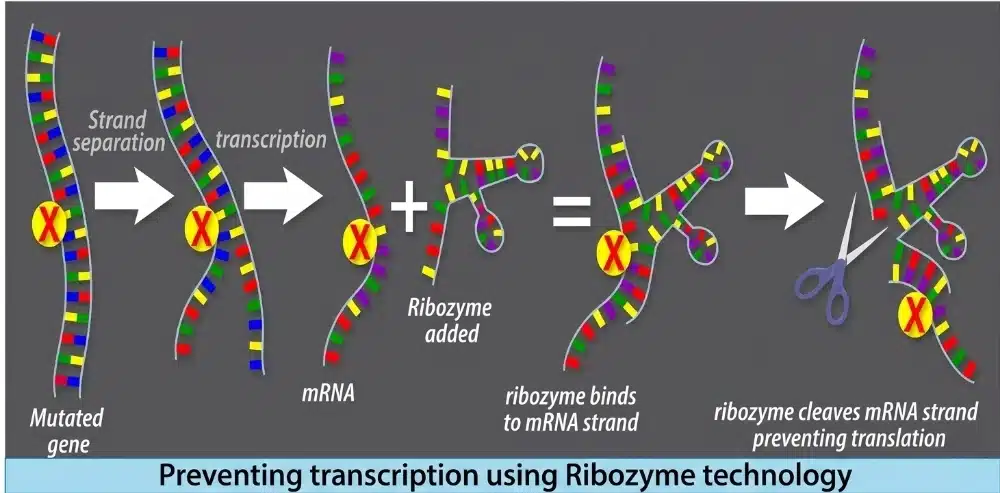
Catalytic Activity
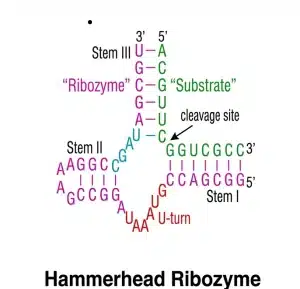
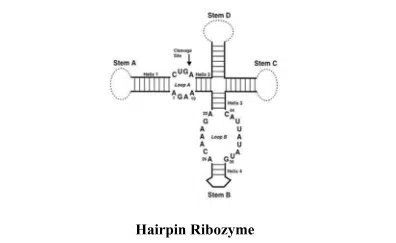
Ribozymes are catalytically active RNA molecules that can cleave mRNA molecules in a sequence-specific way. They contain sequences for selective ligation with target mRNAs, which confers upon them high specificity. Ribozyme can be classified into two different groups:- The self-cleaving (30-150 nucleotide long) RNAs which include the hammerhead, hairpin, hepatitis delta virus, and satellite.
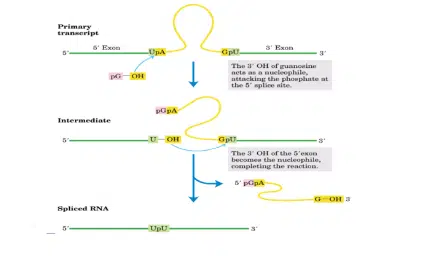
- The self-splicing ribozymes (100-3000 nucleotide long) that are the group I and group II introns, RNase P.
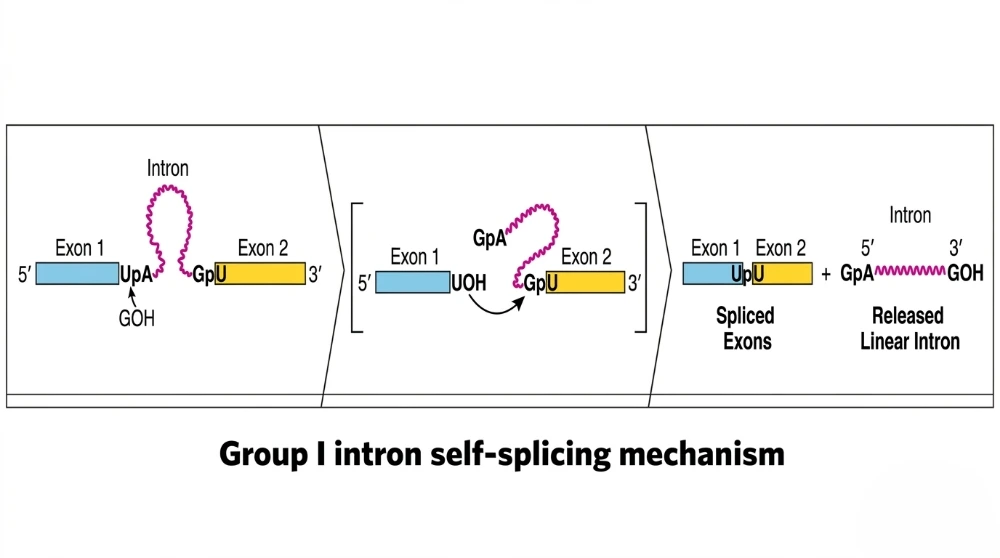
- Group I intron ribozymes are one of the most common types of ribozymes found in bacteria, lower eukaryotes, and higher plants. They are inserted into the genes of a wide range of bacteriophages of Gram-positive bacteria.
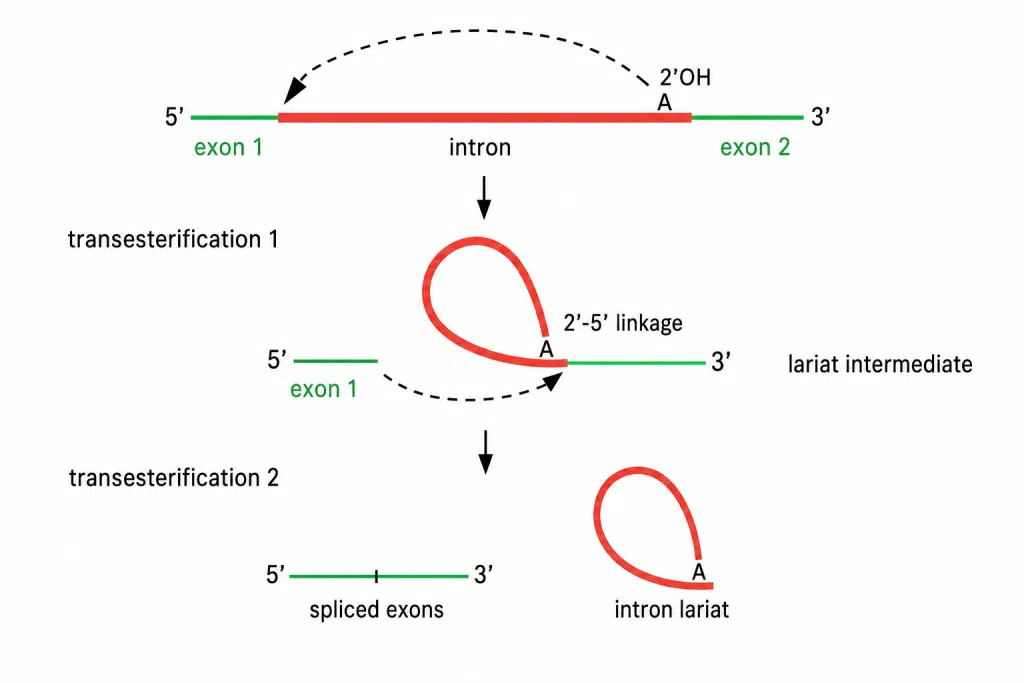
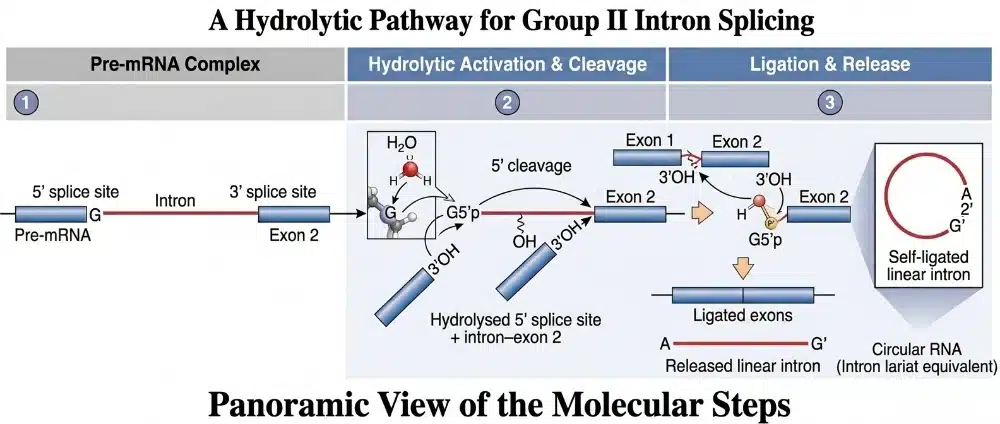
- Group II introns have been found in bacteria and in the mitochondrial and chloroplast genomes of fungi, plants, protists, and an annelid worm.
Mechanism
Ribozymes work by recognizing and binding to a specific RNA sequence. In this process, the 2’-OH group of a particular adenosine acts as a nucleophile and attacks the 5’ splice site, forming a branched intron structure. Then, the 3’-OH group of the 5’ exon attacks the 3’ splice site, joining the exons together and releasing the intron in the form of a lariat structure.1. Self Cleaving Ribozyme
RNase P The first functional RNA enzyme that investigators found was ribonuclease P (RNase P). It acts as an endonuclease to generate the mature 5’ end of tRNA precursors. It requires divalent cations for cleaving. The mechanism of cleavage is hydrolysis rather than transesterification. RNase P lacks the requirement for a specific nucleotide sequence for cleavage.Hammerhead Ribozyme