
Introduction
Biotechnology is a rapidly developing branch of science in the world. It combines biology, microbiology, chemistry, and technology to come up with new solutions in healthcare, agriculture, pharmaceuticals, and environmental protection. As the world evolves rapidly, the demand for skilled biotechnology professionals is increasing globally.
The knowledge gained through academics alone is not enough to build a successful career in this field. Students need additional skills such as laboratory expertise, analytical thinking, research ability, and effective communication. These competencies help scientists perform experiments, analyze data, and contribute to innovation.
The right balance between technical and professional skills enables biotechnology students to succeed in research labs, industries, and academic institutions.
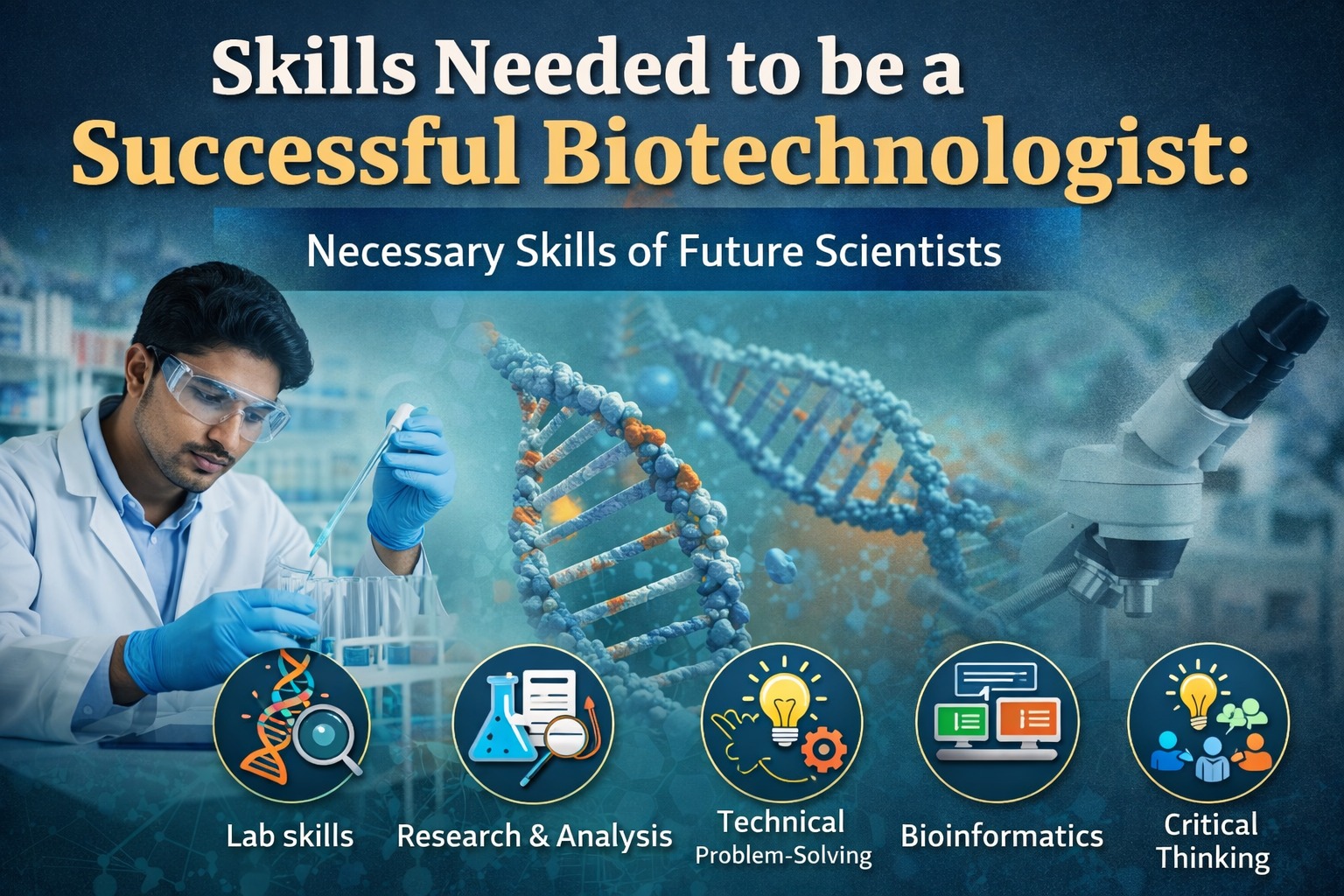
Learning about the Work of a Biotechnologist
A biotechnologist is a scientist who works with biological systems, microorganisms, and cellular processes to develop products and technologies that improve human life. Biotechnology is applied in medicine, agriculture, industrial production, environmental management, and vaccine development.
Biotechnologists work in laboratories where they conduct experiments, analyze samples, and contribute to scientific discoveries. Since biotechnology is interdisciplinary, professionals need both theoretical knowledge and practical skills.
To succeed in this dynamic field, students must focus on developing essential biotechnology skills.
📚 Also Read:
Critical Skills a Great Biotechnologist Needs
-
Strong Foundation in Biological Sciences: A biotechnologist must have a solid understanding of molecular biology, microbiology, genetics, biochemistry, and cell biology.
This foundation helps in understanding advanced topics like genetic engineering, bioinformatics, and immunology.
-
Technical and Laboratory Skills: Laboratory skills are essential in biotechnology as most work is experimental.
Important techniques include DNA extraction, PCR, gel electrophoresis, microbial culturing, spectrophotometry, and cell culture.
-
Critical and Analytical Thinking: Biotechnology research involves analyzing complex biological data and interpreting results accurately.
-
Problem-Solving Ability: Experiments do not always give expected results, so problem-solving skills are crucial for improving research methods.
-
Bioinformatics and Data Analysis: Modern biotechnology generates large datasets. Knowledge of bioinformatics helps in analyzing genomic and molecular data.
-
Scientific Writing and Communication: Researchers must effectively communicate findings through reports, papers, and presentations.
-
Teamwork and Collaboration: Biotechnology involves collaboration among experts from multiple disciplines.
Long-term Career in Biotechnology
A career in biotechnology offers many career opportunities after developing the required skills. Professionals are in demand in pharmaceutical companies, research institutions, agriculture, and environmental sectors.
Common career roles include Research Scientist, Microbiologist, Biotechnologist, Quality Control Analyst, Bioinformatics Specialist, and Academic Researcher.
The demand for biotechnology professionals is expected to grow significantly in the future.
Conclusion
Biotechnology is a growing field that combines scientific knowledge with technology to solve real-world problems. Students must develop key skills such as strong academic knowledge, lab skills, analytical thinking, communication, and teamwork.
Continuous learning and practical experience will help future biotechnologists build successful careers and contribute to scientific advancement.
Frequently Asked Questions (FAQs)
Q.1. What skills are required to become a successful biotechnologist?
Ans: Strong knowledge of biology, lab skills, analytical thinking, problem-solving, and communication skills are required.
Q.2. Is biotechnology a good career option?
Ans: Yes, it offers opportunities in healthcare, pharmaceuticals, agriculture, and research.
Q.3. Which laboratory techniques are important?
Ans: PCR, gel electrophoresis, DNA extraction, microbial culturing, and spectrophotometry.
Q.4. Can biotechnology students work in pharma companies?
Ans: Yes, they can work in drug development, research, and quality control.
Author:
Dr. Ritu Jangid
Assistant Professor, Department of Science
Biyani Girls College, Jaipur