

Introduction
Biotechnology is a rapidly developing branch of science in the world. It combines biology, microbiology, chemistry, and technology to come up with new solutions in the field of healthcare, agriculture, pharmaceutical, and saving the environment. The world is evolving rapidly in the context of modern science, which means that the quality of specialists in biotechnology is in demand in the world market.
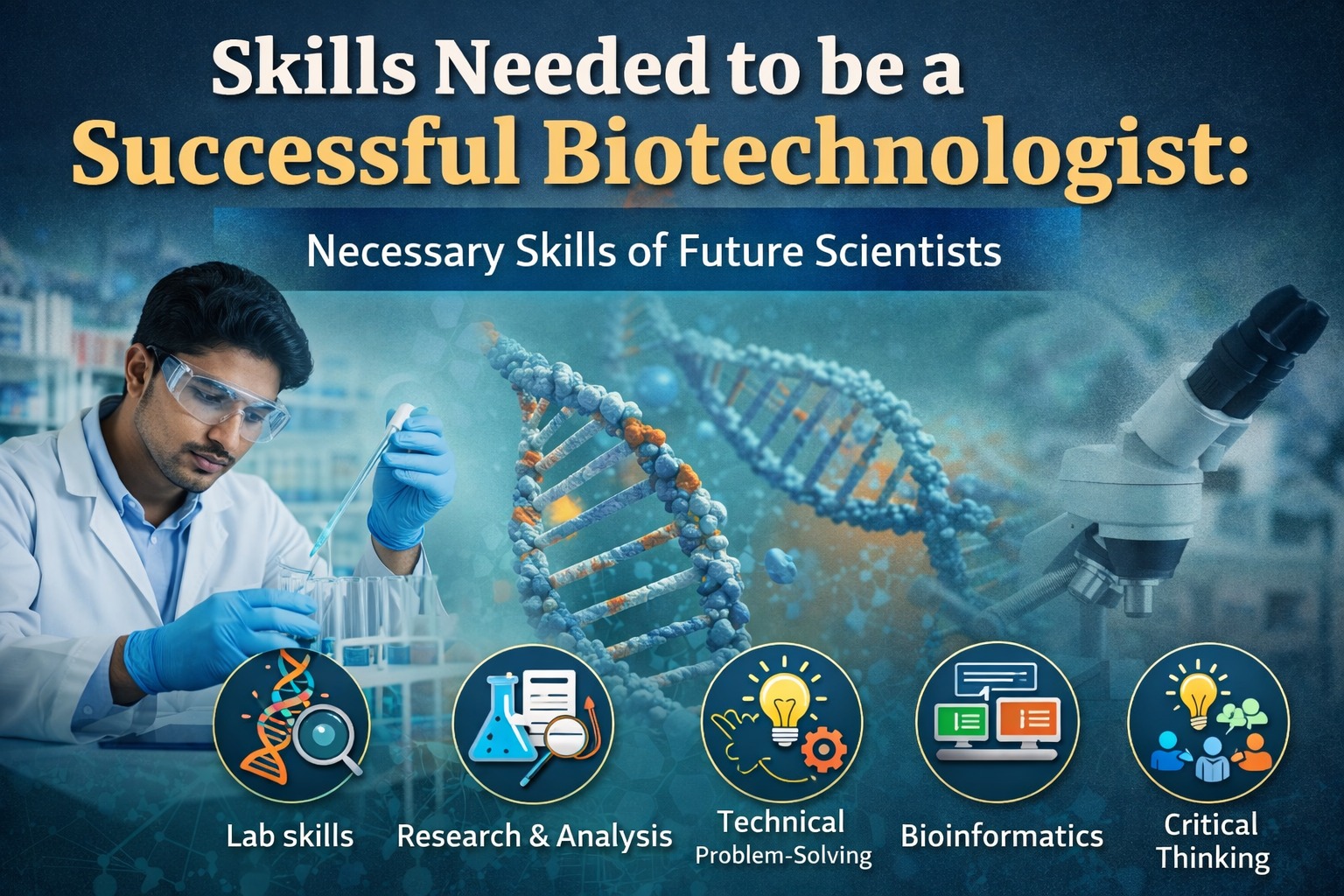
The knowledge gained through the academics would not suffice to establish a successful career in this profession, however. There are various skills that a student needs in order to become a successful biotechnologist, who should possess laboratory skills, analytical skills, research skills, and the ability to communicate effectively. These competencies will allow scientists to make experiments, analyze data and make scientific innovations that will serve the society.
The correct balance between technical and professional capabilities can make the biotechnology students succeed in the research laboratories, biotechnology industries, and academic institutions.
Learning about the Work of a Biotechnologist
A biotechnologist is a scientist who works with biological systems, microorganisms and cellular processes to come up with products and technology that enhance human life. Biotechnology could be used in most areas like medicine, agriculture, industrial production, environmental management, and vaccine development.
The biotechnologists work in laboratories where they perform experiments, analyze biological samples, create new technologies, and make their contribution to the scientific discoveries. Given that biotechnology is an interdisciplinary field, the professionals should be equipped with the theoretical knowledge as well as practical expertise.
In order to achieve success in this dynamic sphere, students should concentrate on the acquisition of the significant skills of biotechnologists enabling them to work effectively in the sphere of researches and industry.
📚 Also Read:
Critical Technology that a Great Biotechnologist needs
- Good Life in Biological Sciences
An excellent biotechnologist should possess a good academic background in molecular biology, microbiology, genetics, biochemistry and cell biology. These topics are a solid insight into the functioning of biology and are instrumental in assisting scientists to formulate good experiments.
With high conceptual awareness, students can learn more advanced subjects like genetic engineering, recombinant DNA technology, bioinformatics and immunology easily.
To be skilled in biotechnology, one must always learn and keep up with the new developments in the field of science.
- Technical and Laboratory Skills
The most significant skills that are necessary to become a successful biotechnologist are laboratory skills. Biotechnology research is mostly experimental, and therefore, as an entrepreneur, students should be conversant with different laboratory methods.
Significant lab methods are: DNA isolation and purification, Polymerase Chain Reaction (PCR), Gel electrophoresis, Microbial culturing methods, Spectrophotometry and Cell culture methods.
Practical laboratory training also aids the students in getting accuracy, precision and confidence when conducting an experiment. Experience is very important in the biotechnology industries and research centers.
- Critical and Analytical Thinking
The research in Biotechnology entails the study of the intricate biological data and the interpretation of the experimental findings. Thus, critical thinking is a necessary ability of biotechnology professionals.
Researchers should be keen in analyzing experiments results, creating trends, and reaching logical conclusions. Critical thinking is also able to assist the researchers to make superior experiments and to trouble shoot issues in the lab.
Effective analysis of scientific data guarantees credible and correct findings of research.
- Problem-Solving Ability
Scientific experiments are not always expected to give expected outcomes. Consequently, the other important skill that is needed in biotechnology is problem-solving ability.
An effective biotechnologist should be capable of detecting the mistakes in the experiments, altering research plans, and coming up with other methods. The skills in solving problems are crucial especially in research laboratories where researchers are always faced with unforeseen difficulties.
The skill assists researchers in enhancing the experimental design and creating new solutions to a scientific issue.
- Bioinformatics and Data Analysis Knowledge
The current biotechnology is producing massive volumes of biological information in genomic sequencing, proteomics, and molecular studies. Bioinformatics assists scientists to analyze and interpret this data appropriately.
Simple knowledge of bioinformatics software and databases on biology is becoming more relevant in biotechnology students. The abilities of sequence analysis, search in databases, and interpretation of statistical data are used to make scientific research more efficient.
Bioinformatics is currently regarded as a valuable aspect of contemporary biotechnology.
- Scientific Writing and Communication
Scientific discoveries and research findings require the use of communication skills to share the findings. Biotechnologists should be in a position to communicate effectively in terms of scientific reports, research papers, and presentation.
The writing of scientific materials is relevant to the publication of research articles, writing up of project proposals and passing across scientific ideas to scientific community.
Also, presentation skills assist scientists in presenting their work in seminars, scientific meetings and conferences.
- Teamwork and Collaboration
The field of biotechnology research is usually associated with cooperation of scientists specializing in various fields including biology, chemistry, bioinformatics and engineering.
A key professional skill that biotechnologists should have is to work successfully within a team. Teamwork assists researchers to share ideas, skills, and come up with new ways of addressing complex biological issues.
In the large research projects organized in the university or in biotechnology industries, teamwork is also important.
Long-term employment in Biotechnology
A career in becoming a successful biotechnologist presents numerous “career opportunities once the skills are developed to achieve success. Biotechnology experts are also sought after in pharmaceutical firms, research organisations, agricultural biotechnology firms and environmental organisations.
The typical career programs are: Research Scientist, Microbiologist, Biotechnologist and pharmaceutical industries, Quality Control Analyst, Bioinformatics Specialist and Academic researcher or professor.
As biotechnology continues to develop, the number of professionals who are required will increase in the near future.
Conclusion
Biotechnology is an emerging science which is a combination of scientific understanding and technological advancement to address real life issues. In order to achieve success in this sphere, students should train the skills necessary to become a successful biotechnologist, such as good academic knowledge, laboratory skills, analytical skills, communication skills and teamwork.
Through the continuous learning process, hands-on lab work, and being abreast of the latest technology, future biotechnologists are able to establish a successful career and help in the advancement of science that will benefit society.
Frequently Asked Questions (FAQs)
Q.1. What skills are required to become a successful biotechnologist?
Ans. : A successful biotechnologist needs strong knowledge of biology, laboratory skills, analytical thinking, problem-solving ability, and scientific communication skills.
Q.2. Is biotechnology a good career option?
Ans: Yes, biotechnology is a rapidly growing field with career opportunities in healthcare, pharmaceuticals, agriculture, environmental science, and research.
Q.3. Which laboratory techniques are important in biotechnology?
Ans: Important techniques include PCR, gel electrophoresis, DNA extraction, microbial culturing, and spectrophotometry.
Q.4. Can biotechnology students work in pharmaceutical companies?
Ans: Yes, biotechnology graduates can work in pharmaceutical industries in areas such as drug development, research and development, and quality control.
Author:
Dr. Ritu Jangid
Assistant Professor,
Department of Science
Biyani Girls College, Jaipur