
Global education gives students opportunities to learn beyond the classroom. Along with academic knowledge, international exposure helps them understand different cultures, improve communication skills, and gain a broader perspective that is valuable for higher studies and future careers.
Japan is one of the world’s leading destinations for research, technology, and innovation. Its universities and research institutions provide excellent learning opportunities, making it a preferred choice for academic exchange programmes.
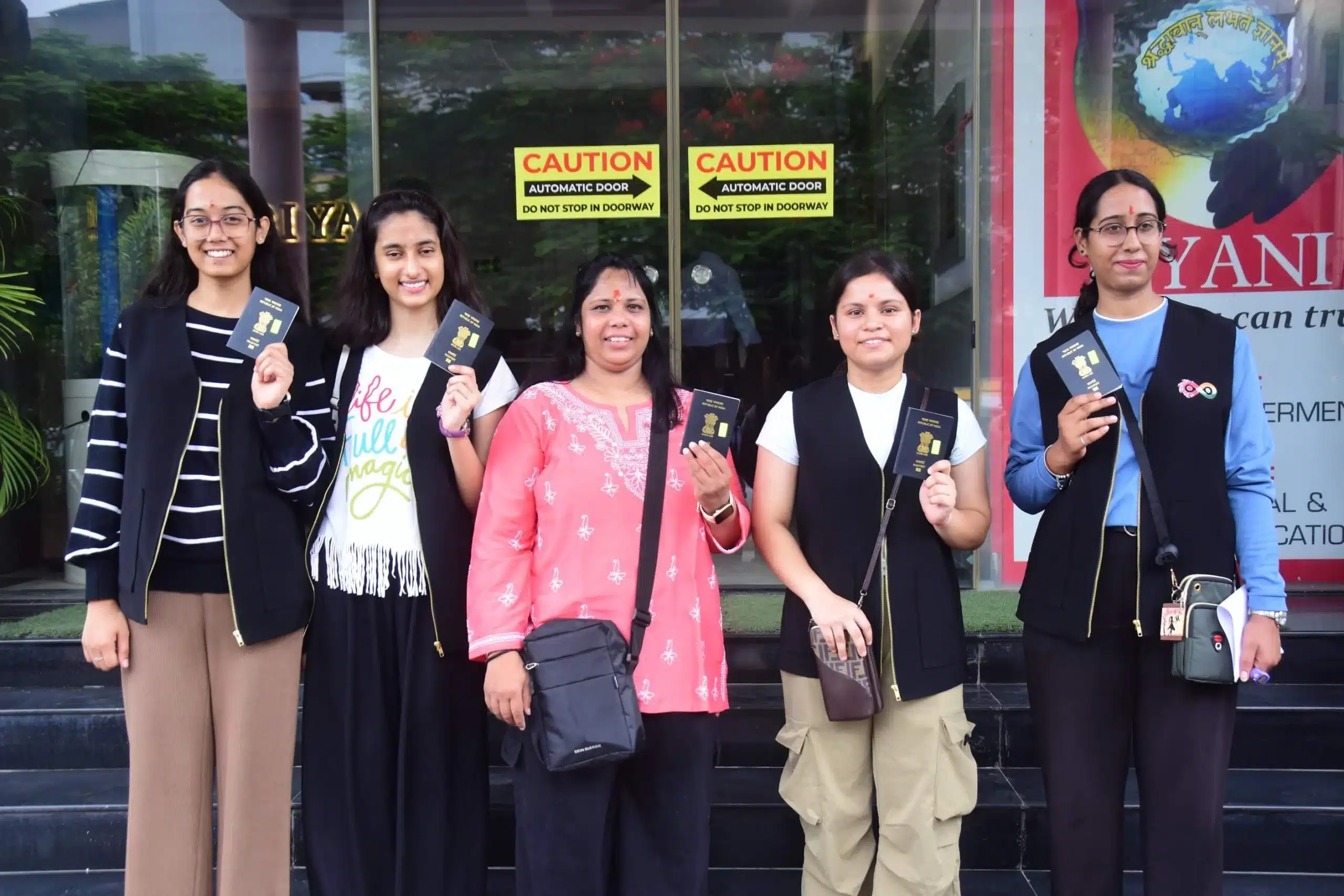
Continuing its commitment to global education, Biyani Group of Colleges has once again sent a group of students(Mansi Kumawat, Pratiksha Sharma, Meenal Sharma, Bhavika Dixit), accompanied by Dr. Shilpa Bhargava (HOD – Science Department) on 24 July,2026 , to Japan under the prestigious Sakura Student Exchange Programme. The visit offers students the chance to experience advanced laboratories, interact with international academicians, and learn about Japan’s world-class education and research ecosystem.
This programme is more than an educational tour. It helps students gain practical knowledge, international exposure, and valuable cultural experiences that contribute to their personal and professional growth.
What is the Sakura Student Exchange Programme?
The Sakura Student Exchange Programme, also known internationally as the Sakura Science Exchange Programme, is one of Japan’s most respected academic exchange initiatives. It is designed to strengthen scientific cooperation between Japan and participating countries by inviting talented students, researchers, and young academicians to experience Japan’s advanced education and research ecosystem.
Supported by the Japan Science and Technology Agency (JST), the programme encourages international collaboration in science, technology, engineering, and innovation. Participants gain first-hand exposure to Japanese universities, research laboratories, innovation centres, and industries while interacting with leading scientists, professors, and fellow students from around the world.
The programme focuses on several important objectives:
- Promoting international scientific collaboration.
- Encouraging innovation and research-oriented thinking.
- Building global academic networks.
- Enhancing cross-cultural understanding.
- Inspiring students to pursue higher education and research.
- Strengthening long-term educational partnerships between countries.
📚 Read Also
Another Proud Moment for Biyani Group of Colleges
The departure of another student delegation to Japan marks a significant milestone for Biyani Group of Colleges and reflects its long-standing commitment to international education. Every year, the institution encourages talented students to participate in prestigious academic exchange programmes that help them expand their knowledge beyond conventional classroom learning.
This year, a selected group of students, accompanied by Dr. Shilpa Bhargava (HOD – Science Department), has travelled to Japan under the Sakura Student Exchange Programme. Their participation highlights the institution’s dedication to providing students with meaningful opportunities for international exposure, research learning, and academic collaboration.
During the programme, students are expected to engage in a variety of educational activities, including:
- Interactions with Japanese universities and academic institutions.
- Visits to advanced scientific laboratories and research centres.
- Learning about Japan’s education system and research culture.
- Participation in academic discussions and innovation-focused sessions.
- Exposure to emerging technologies and scientific advancements.
- Building professional and academic connections with international participants.
- Understanding global approaches to higher education and research.
Such experiences contribute not only to academic development but also to personal growth. Students learn to adapt to different environments, communicate across cultures, and develop a broader perspective that benefits them throughout their educational and professional journeys.
Why Japan is a Preferred Destination for Academic Exchange
Japan is one of the world’s top destinations for higher education, research, and innovation. Its universities are known for academic excellence, advanced laboratories, and strong industry partnerships that provide students with practical learning experiences alongside classroom education.
Students visiting Japan through the Sakura Student Exchange Programme get the opportunity to explore modern research facilities, interact with experts, and learn about emerging fields such as Artificial Intelligence (AI), Robotics, Biotechnology, Electronics, and Sustainable Technology. The country’s strong focus on STEM education encourages creativity, innovation, and problem-solving.
Apart from academics, Japan is admired for its discipline, safety, cleanliness, and rich cultural heritage. Students gain valuable international exposure while experiencing a unique blend of traditional values and modern technology.
Academic Benefits Students Receive Through the Sakura Student Exchange Programme
One of the greatest strengths of the Sakura Student Exchange Programme is that it offers students an opportunity to experience education beyond the boundaries of a traditional classroom. Instead of relying solely on lectures and textbooks, participants become part of an interactive academic environment where research, innovation, and practical learning are central to the educational process.
For students from Biyani Group of Colleges, this international exposure opens doors to new ideas, advanced technologies, and modern teaching methodologies that may not always be available in a conventional academic setting. Every interaction, laboratory visit, and discussion contributes to their intellectual and professional growth.
Some of the major academic benefits include:
- Exposure to Advanced Research Laboratories:
- Learning Modern Research Methodologies:
- Innovation and Problem-Solving Skills:
- International Classroom Experience
- Improved Communication Skills
- Critical Thinking and Analytical Ability
- Better Career Opportunities:
International academic experience often enhances a student’s profile. Participation in programmes like the Sakura Student Exchange Programme demonstrates initiative, adaptability, and a willingness to learn in diverse environments.
Such achievements can strengthen applications for higher education, scholarships, research opportunities, and employment in both India and abroad.
Benefits of Student Exchange Programmes vs Traditional Classroom Learning
| Student Exchange Programmes | Traditional Classroom Learning |
|---|---|
| International academic exposure | Primarily local academic environment |
| Practical laboratory experience | Mostly theoretical learning |
| Cross-cultural interaction | Limited multicultural exposure |
| Global networking opportunities | Networking within local institutions |
| Exposure to advanced research facilities | Access depends on institutional resources |
| Development of international communication skills | Communication mainly within familiar environments |
| Understanding of global education systems | Focus on domestic curriculum |
| Greater confidence and adaptability | Limited international experience |
| Better preparation for global careers | Strong academic foundation with fewer international opportunities |
| Enhanced opportunities for higher studies abroad | Additional international exposure required later |
The comparison clearly demonstrates why international programmes like the Sakura Student Exchange Programme are becoming increasingly valuable for students who aspire to build successful global careers. By combining academic excellence with practical exposure and cultural learning, these programmes prepare students to thrive in an interconnected world.
How International Exchange Shapes Future Careers
International education has become an essential part of modern learning, helping students develop the skills needed for higher studies, research, and global careers. Programmes like the Sakura Student Exchange Programme provide valuable international exposure that enhances academic and personal growth.
Students gain confidence, improve communication skills, adapt to diverse cultures, and develop a broader perspective. Exposure to internationally recognized universities and research environments also prepares them for postgraduate studies, scholarships, and research opportunities.
The programme strengthens global employability by building leadership, teamwork, adaptability, and cross-cultural communication skills that employers highly value. It also encourages research-oriented thinking through interaction with advanced laboratories, researchers, and academic discussions.
Additionally, students build lasting professional networks with professors, researchers, and peers from around the world, opening doors to future collaborations, internships, and career opportunities. Overall, the Sakura Student Exchange Programme equips students with the confidence, knowledge, and global outlook needed to succeed in today’s interconnected world.
Biyani’s Commitment Towards Global Education
At Biyani Group of Colleges, education extends beyond classroom learning. The institution has consistently worked towards creating opportunities that prepare students for a globally connected future. Through international collaborations, academic partnerships, research initiatives, and student mobility programmes, Biyani encourages learners to explore educational experiences that broaden their perspectives and strengthen their career prospects.
The college’s emphasis on international education reflects its belief that meaningful learning happens when students engage with different cultures, ideas, and academic systems. Participation in programmes like the Sakura Student Exchange Programme demonstrates this vision by providing students with access to global learning experiences that complement their academic education.
Through its International Affairs & Global Engagement initiatives, the institution actively promotes:
- International academic exchange programmes.
- Student mobility opportunities.
- Global research collaborations.
- Foreign university partnerships.
- Faculty exchange initiatives.
- International conferences and academic networking.
- Collaborative learning with global institutions.
Students interested in these opportunities can learn more through the official International Affairs & Global Engagement page
The continued participation of students and faculty in international programmes reflects the institution’s commitment to nurturing globally competent graduates who are prepared to contribute to society through knowledge, innovation, and leadership.
Learning Beyond Borders
International exchange programmes are not simply about travelling to another country—they are about discovering new ways of thinking, learning, and solving problems. Every classroom discussion, laboratory visit, cultural interaction, and academic exchange adds a new dimension to a student’s educational journey.
For the students participating in this year’s Sakura Student Exchange Programme, the experience in Japan represents an opportunity to witness excellence in education, research, and innovation while building friendships and professional relationships that can last a lifetime.
As they return with new knowledge, ideas, and experiences, they also bring back valuable insights that can inspire their peers and contribute to the academic community at Biyani.
Conclusion
The latest participation of students and Dr. Shilpa Bhargava (HOD – Science Department) in the Sakura Student Exchange Programme is another proud chapter in Biyani Group of Colleges’ journey towards international academic excellence. It reflects the institution’s continued commitment to providing students with opportunities that extend beyond conventional education and prepare them for success in an increasingly interconnected world.
By experiencing Japan’s world-class universities, research facilities, scientific innovation, and rich cultural heritage, students gain knowledge that cannot be acquired through textbooks alone. They return with improved academic understanding, stronger communication skills, greater confidence, and a broader global perspective that will benefit them throughout their careers.
Frequently Asked Questions (FAQs)
1. What is the Sakura Student Exchange Programme?
The Sakura Student Exchange Programme is an international academic initiative supported by the Japan Science and Technology Agency (JST). It provides students with opportunities to visit Japan for academic learning, research exposure, cultural exchange, and collaboration with Japanese universities and research institutions.
2. What are the benefits of participating in the Sakura Student Exchange Programme?
Students gain exposure to advanced laboratories, research methodologies, international classrooms, innovation ecosystems, cultural diversity, and global networking opportunities. The programme also helps improve communication skills, critical thinking, and career readiness.
3. Why is Japan a preferred destination for higher studies and academic exchange?
Japan is known for its world-class universities, cutting-edge research facilities, technological innovation, strong STEM education, and close collaboration between academia and industry. It also offers a safe, disciplined, and student-friendly environment for international learners.
4. How does an academic exchange programme help students?
Academic exchange programmes provide practical learning experiences, international exposure, cross-cultural understanding, and opportunities to interact with global experts. These experiences enhance academic knowledge, personal growth, and professional development.
5. How does international exposure improve career opportunities?
International exposure develops adaptability, leadership, communication skills, and global awareness. These qualities make students more competitive for higher education, research opportunities, scholarships, and employment in multinational organizations.
6. What global learning opportunities does Biyani Group of Colleges provide?
Biyani Group of Colleges encourages students to participate in international academic exchange programmes, research collaborations, faculty interactions, student mobility initiatives, and global education partnerships through its International Affairs & Global Engagement initiatives.
7. Why is research exposure important for students?
Research exposure helps students understand scientific methodologies, analytical thinking, innovation, and problem-solving. It also prepares them for postgraduate studies, research careers, and industry-based projects.
8. How can students learn more about Biyani Group of Colleges’ international collaborations?
Students can explore the official International Affairs & Global Engagement page to learn more about global partnerships, student exchange programmes, international collaborations, and academic opportunities.