
Rice (Oryza sativa), cotton (Gossypium sp.), sugarcane (Saccharam officinarum), pulses, and a variety of vegetables like tomatoes (Solanum lycopersicum) and brinjal (Solanum melongena) were among the major crops in India that were highly infected by insects.
In the various Indian states, pests including the slug caterpillar in mango and castor, the ash weevil in ragi, brinjal, and cotton, the grasshopper in rice and maize, the flea beetle in cruciferous crops, the early shoot borer in sugarcane, and the aphids and thrips in vegetables causing severe damage.These challenges are actively studied in postgraduate science programs, where students at leading MSc biotechnology colleges in Jaipur gain practical knowledge about pest management and sustainable agricultural practices.
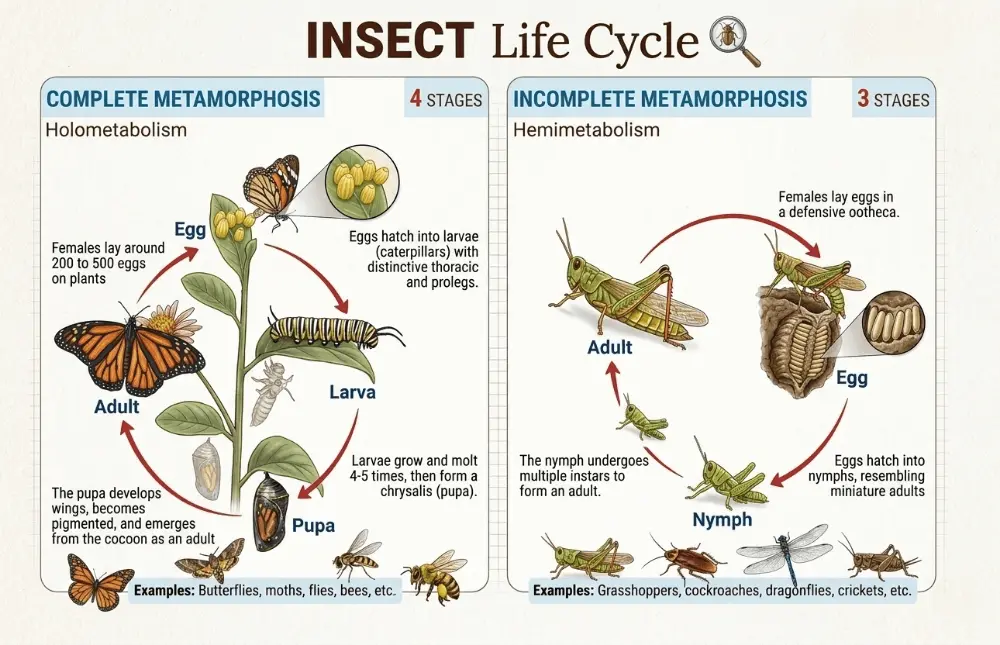
Life Cycle of Insects
Here we show the distinct life cycle of insects which can seriously damage the plants. We can successfully manage the spread of the sickness and control their number by comprehending their life cycle.
Types of Insect Damage to Crops
Two primary ways by which insects destroy crops:
- directly by feeding
- indirectly through polluting or spreading illness.
Insects cause severe damage to plants that affect the growth and productivity of crops.
- Chewing insects : Beetles, grasshoppers, cutworms, caterpillars, and locusts all bite and eat plant elements such leaves, stems, flowers, fruits, and roots. Examples :
- Japanese beetles skeletonize leaves, leaving only the veins
- Tomato hornworms and cotton bollworms can completely stripe the plants
- Weevils eat the edges of leaves on crops like brinjal and cotton, giving the leaves an uneven appearance.
- Piercing–sucking insects : Aphids, whiteflies, leafhoppers, mealy bugs, and scale insects rupture plant tissues, which causes the plant to exhibit symptoms including yellow patches, bending leaves, stunted development, and sticky honeydew that causes sooty mold.
- Rasping-sucking insects: Thrips scratch and suck plant surfaces and leave fruits and plants with discolored spots and silvery particles.
- Internal feeders/borers: Fruit borers, root borers, and stem borers enter inside plant tissues, causing hollow fruits, drooping stems, “dead hearts” in crops like sugarcane and super grains.
- Leaf miners: Their larvae create a subway like tunnels between leaf layers, reduce photosynthesis and prevent leaves from producing food.
- Gall-forming insects: These cause tumor-like abnormal tissue growth called galls, which protect larvae but damage the plant.
- Subterranean pests: Root feeders like wireworms and white grubs target subterranean portions of plants, lowering their strength and causing damage to tubers, which affects our agricultural yield.
Indirect Damage
- Transmission of disease : In sap-sucking insects Aphids, leafhoppers, and whiteflies transfer bacteria, fungus, and viruses. Banana bunchy top disease and tomato leaf curl virus are two examples.
- Create contamination : Dead bodies, shed skins, or insect droppings lower the quality and market value of produced crops.
- Harvest complications: High infestations increase labor expenses and postharvest losses by making harvesting more difficult.
Crop Protection Strategies
It takes a combination of clever farming techniques, natural remedies, and cautious use of technology to protect crops from insect harm. In order to control pests and preserve the environment, farmers frequently mix many strategies.
Cultural and Preventive Actions
- Crop rotation: When we rotate the crops every season it can disturb the life cycles of pests.
- Resistant varieties: We can choose the resistant varieties which are resistant for the disease.
- Good farming practices: Early or late sowing, summer plowing, removing weeds and adding organic matter.
Biological Management
- Natural predators: Ladybugs, predatory wasps, and lacewings.
- Sterile insect release: Inhibits reproduction.
- Microbial insecticides: Natural alternatives.
- Habitat management: Supporting beneficial insects.
Physical and Mechanical Methods
- Hand-picking bugs, barriers, mesh coverings.
- Bait and light traps.
- Soil treatments like ploughing or flooding.
Organic and Chemical Regulators
- Chemical insecticides.
- Organic substitutes like neem oil and plant-based repellents.
- Responsible use under IPM.
Management of Integrated Pests (IPM)
- Combination of all techniques.
- Frequent observation.
- Promotes biodiversity.
Extra Procedures
- Field sanitation.
- Trap crops.
- Natural repellents.
Frequently Asked Questions (FAQs)
1. What are the most common insect pests affecting crops?
Among the most dangerous pests include beetles, locusts, aphids, bollworms, caterpillars, and whiteflies.
Q.2. How can farmers detect harm from insects early on?
Ans. Abnormal plant growth, insect droppings, wilting, holes, discolored leaves, and regular field examination.
Q.3. How may insect pests be sustainably controlled?
Ans. Crop rotation, intercropping, neem-based insecticides, pheromone traps, and natural predators.
Q.4. Does insect damage affect the quality of fruits and vegetables?
Ans. Yes, it reduces market value and increases infection risk.
Summarization
Rice, cotton, sugarcane, lentils, and vegetables like tomato and brinjal are India’s main crops which are seriously threatened by insects.
- Cultural and preventive methods
- Biological control
- Mechanical techniques
- Organic and chemical pesticides
- IPM approach
At the end, we can say that effective pest management balances ecosystem preservation and crop productivity.However, if you are looking to pursue courses in Plant Pathology, Ecosystem Ecology, and Plant Ecology, Biyani Girls College is an excellent choice for you. It offers quality education, experienced faculty, and practical exposure to build a strong foundation in these fields.
Author:
Ms. Monika Saini
Assistant Professor, Department of Science
Biyani Group of Colleges, Jaipur