

Biotechnology is one of the most radical areas of the 21st century, a field that unites the complexity of biology with the accuracy of technology to improve health, agriculture, the environment, and industry. At the best BSc Biotechnology college in Jaipur, this dynamic discipline is shaping the future by transforming our relationship with nature through the development of life-saving medicines and sustainable products that replace traditional plastics.
What is Biotechnology?
Biotechnology could be defined as the use of living organisms, cells and biological systems to design products and technologies that improve the well-being of planet Earth and human life. The word biotechnology is derived from Greek words bios (life) and technikos (technology).
In simple terms, biotechnology applies biological concepts to solve real-life problems.
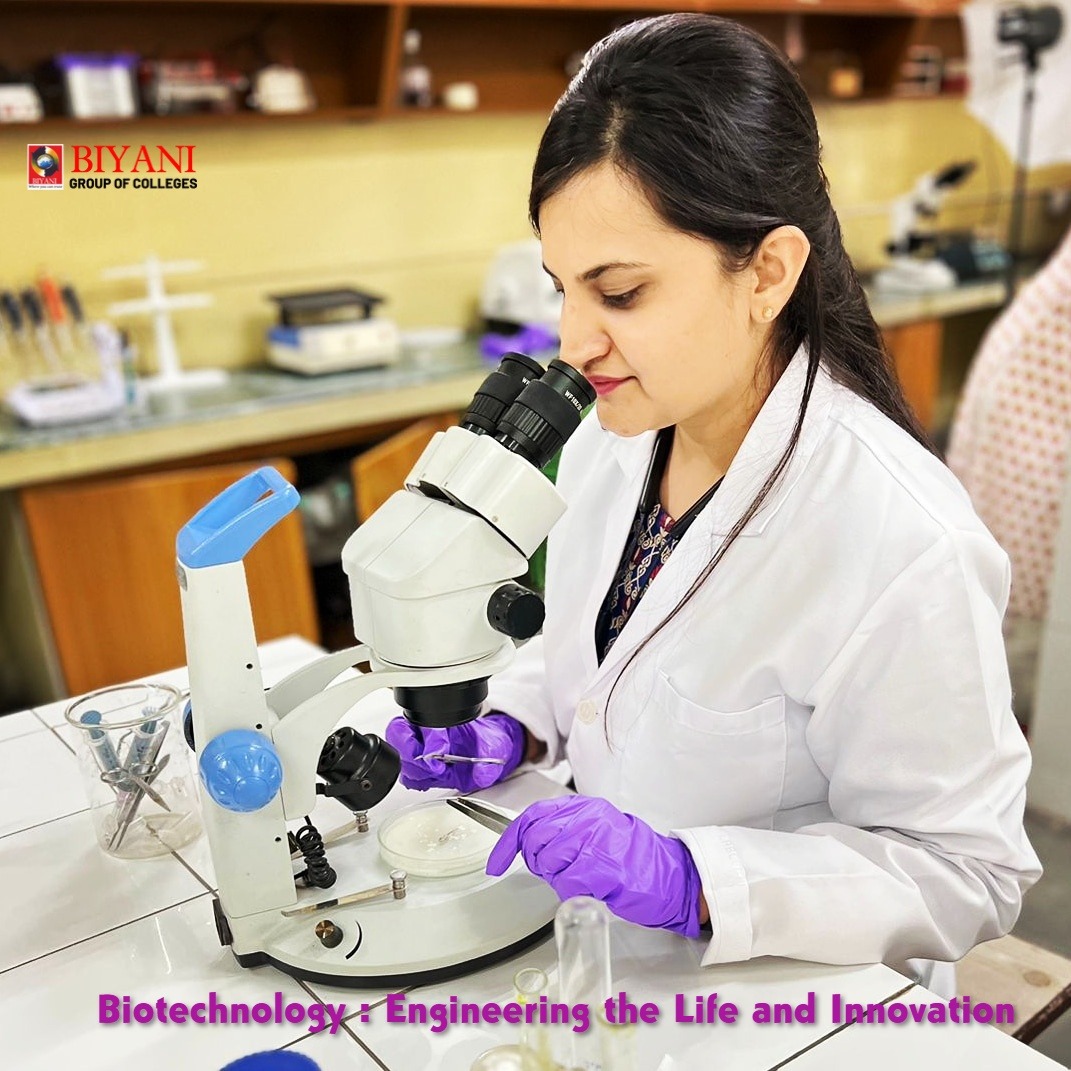
Evolution of Biotechnology
- Ancient Biotechnology: Use of yeast for bread making and bacteria for curdling milk.
- Classical Biotechnology: Fermentation and selective breeding of plants and animals.
- Modern Biotechnology: Use of molecular biology, genetic engineering and bioinformatics to create innovative products.
Branches of Biotechnology
- Medical Biotechnology
This branch focuses on the development of drugs, vaccines and diagnostic tools. Recombinant DNA technology and gene therapy have revolutionized modern medicine, such as insulin production using genetically engineered E. coli.
- Agricultural Biotechnology
It aims to improve crop yield, pest resistance and nutritional quality. Genetically modified crops like Bt cotton and Golden Rice support food security and sustainable agriculture.
- Industrial Biotechnology
Also known as white biotechnology, it uses microorganisms and enzymes to produce biofuels, biodegradable plastics and eco-friendly industrial products.
- Environmental Biotechnology
This field uses microorganisms for pollution control through processes such as bioremediation, wastewater treatment and development of sustainable energy sources.
- Marine and Aquatic Biotechnology
It explores bioactive compounds from marine organisms for use in pharmaceuticals, cosmetics and nutraceuticals.
Important Techniques of Modern Biotechnology
- Recombinant DNA Technology: Transfer of a gene of interest into a host organism to produce desired proteins.
- Polymerase Chain Reaction (PCR): A technique used to amplify specific DNA fragments for research and diagnostics.
- Tissue Culture: In-vitro cultivation of plant or animal cells under sterile conditions.
- CRISPR-Cas9: A powerful gene-editing tool used to correct genetic disorders with high precision.
- Bioinformatics: Computational analysis of biological data such as genomics and proteomics.
Applications of Biotechnology
- Healthcare and Medicine: Development of vaccines, monoclonal antibodies, gene therapy and personalized medicine.
- Agriculture: Production of pest-resistant and drought-tolerant crops, biofertilizers and biopesticides.
- Environment: Pollution control, oil spill cleanup, wastewater treatment and biodegradable materials.
- Food Industry: Fermentation processes for yogurt, cheese and beverages, along with food safety testing.
- Industrial Production: Manufacture of enzymes, bioethanol and eco-friendly biopolymers.
Future Prospects and Challenges
Biotechnology continues to advance with innovations in synthetic biology, nanobiotechnology and artificial intelligence. However, ethical concerns, biosafety issues and biodiversity conservation must be addressed responsibly.
The Role of India in Biotechnology
India is emerging as a global biotechnology hub with support from government bodies such as the Department of Biotechnology (DBT), BIRAC and CSIR. Indian scientists have made notable contributions in vaccine development, agriculture biotechnology and affordable healthcare.
Conclusion
Biotechnology is a powerful blend of science and innovation that improves quality of life. From food and medicine to environmental sustainability, it offers solutions to some of the world’s biggest challenges. Responsible use and ethical regulation will ensure biotechnology benefits humanity and nature alike.
Blog By:
Dr. Ritu Jangid
Assistant Professor,
Department Of Science
Biyani Group Of Colleges, Jaipur