
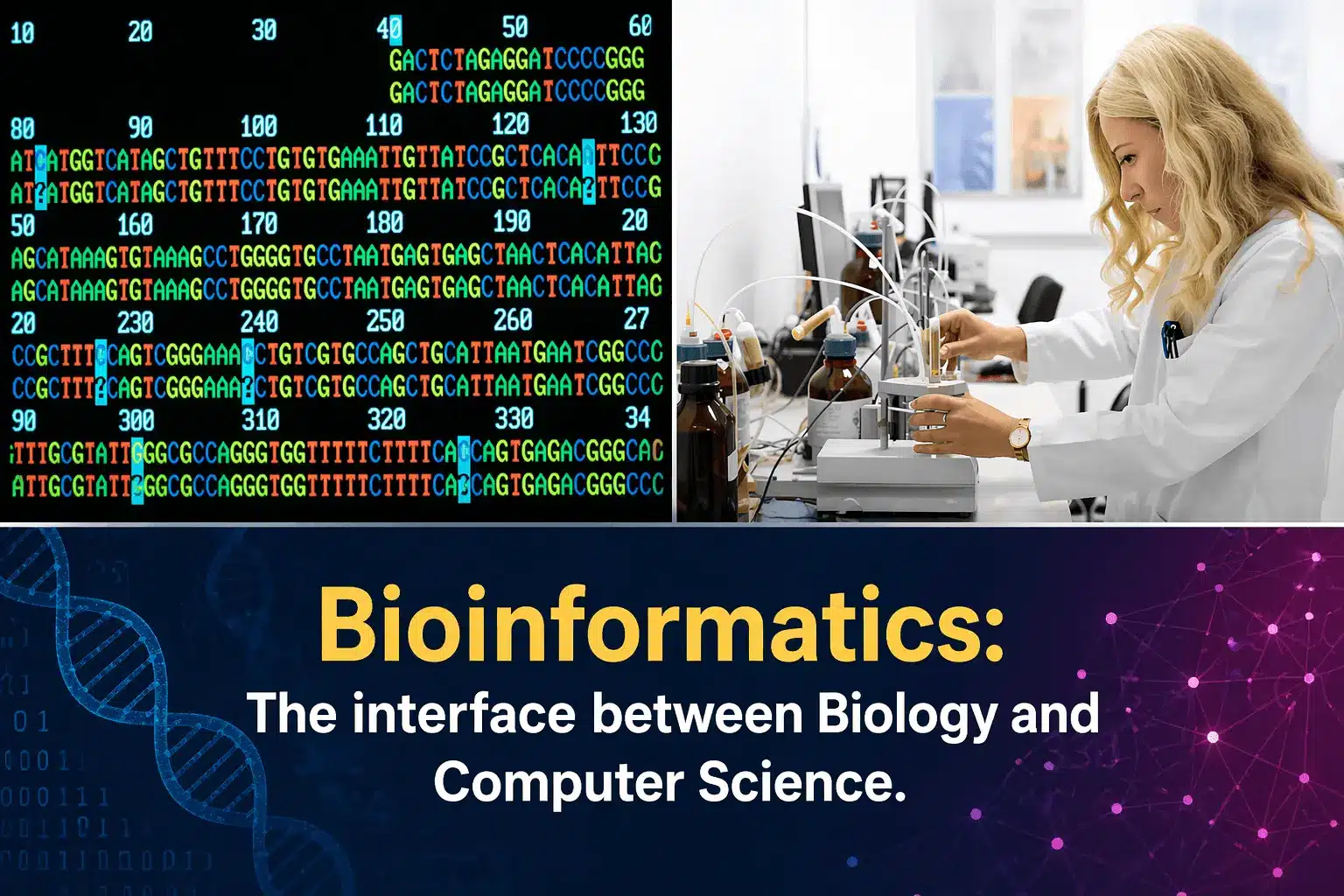
Bioinformatics is one of the most important interdisciplinary fields in today’s rapidly evolving world of science and technology. It integrates biology, computer science, mathematics, and statistics to interpret complex biological data. This field plays a crucial role in genetic, molecular, biotechnology, and medical studies, especially for students studying in a BSc biotech college.
With the ever-increasing amount of biological information, there is a growing need for advanced computational tools to process and analyze this data. Bioinformatics acts as a bridge between biological sciences and computing technologies, helping researchers efficiently store, organize, analyze, and interpret vast datasets.
What is Bioinformatics?
Bioinformatics is the application of computational techniques, software programs, and algorithms to biological data. It mainly focuses on analyzing DNA, RNA, and protein sequences, gene expression patterns, molecular structures, and biological pathways.
In simple terms, bioinformatics helps scientists understand complex biological information using computer-based tools and databases.
- Biology – Understanding living organisms at the molecular level
- Computer Science – Programming, database management, and software development
- Mathematics & Statistics – Data analysis and interpretation
Importance of Bioinformatics
Modern biology has transformed due to technologies like genome sequencing, proteomics, and molecular diagnostics. These technologies generate massive datasets that cannot be analyzed manually.
Bioinformatics provides tools and techniques to:
- Store biological data in organized databases
- Compare gene and protein sequences
- Predict structure and function of biomolecules
- Analyze evolutionary relationships
- Identify disease-related genes
- Develop new drugs and treatments
Without bioinformatics, advancements in genomics and molecular biology would be extremely difficult.
Major Areas of Bioinformatics
- Sequence Analysis
This is one of the fundamental applications of bioinformatics. DNA, RNA, and proteins are made up of sequences of nucleotides and amino acids.
- Sequence Alignment
- Multiple Sequence Alignment
- BLAST Analysis
- Gene Prediction
These methods help identify unknown genes by comparing them with known sequences.
- Genomics
Genomics involves the study of an organism’s entire genetic material.
- Genome Sequencing
- Genome Assembly
- Gene Annotation
- Comparative Genomics
The Human Genome Project is a major milestone achieved using bioinformatics tools.
- Proteomics
Proteomics focuses on studying proteins, their structure, functions, and interactions.
- Protein Sequence Analysis
- Protein Structure Prediction
- Protein Interaction Studies
- Functional Annotation
Proteins are essential as they perform most biological functions.
- Structural Bioinformatics
This field deals with the 3D structure of biomolecules such as proteins and nucleic acids.
- Drug Design
- Molecular Docking
- Enzyme Studies
- Therapeutic Protein Development
Applications of Bioinformatics
- Disease Diagnosis
Bioinformatics helps identify genes associated with diseases like cancer by detecting mutations.
- Drug Discovery
It aids in predicting drug targets and modeling drug interactions, saving time and cost.
- Personalized Medicine
Treatments can be tailored based on an individual’s genetic profile, improving effectiveness.
- Agriculture & Crop Improvement
Bioinformatics enhances crop yield, disease resistance, and nutritional value.
- Evolutionary Studies
It helps scientists understand evolutionary relationships using phylogenetic analysis.
Common Bioinformatics Tools & Databases
- BLAST – Sequence comparison
- NCBI – Biological databases
- ClustalW – Multiple sequence alignment
- Protein Data Bank – Protein structures
- GenBank – Nucleotide sequences
Career Scope in Bioinformatics
- Bioinformatics Analyst
- Research Scientist
- Healthcare Data Scientist
- Genomics Specialist
- Computational Biologist
- Pharmaceutical Research Associate
With advancements in genomics and AI, demand for skilled professionals is continuously increasing.
Frequently Asked Questions (FAQs)
Q.1. What is Bioinformatics?
Ans. Bioinformatics is a field that combines biology, computer science, and mathematics to analyze and understand biological data, especially DNA, RNA, and protein sequences.
Q.2 What are some common applications of bioinformatics?
Ans. Genome sequencing, Drug discovery, Disease diagnosis, Evolutionary studies, Personalized medicine
Q.3. What tools are used in bioinformatics?
Ans. Common tools include databases (like GenBank), software for sequence alignment, and programming languages like Python and R.
Q.4 Is bioinformatics a good career option?
Ans. Yes, it has growing opportunities in healthcare, pharmaceuticals, agriculture, and research fields.
Conclusion
Bioinformatics has revolutionized biological research by combining biology and computational science. It plays a key role in genomics, proteomics, drug discovery, disease diagnosis, and biotechnology. As science becomes more data-driven, bioinformatics will continue to drive innovation and help us better understand life at a molecular level.
Author:
Dr. Ritu Jangid
Assistant Professor, Department of Science
Biyani Group Of Colleges, Jaipur