Every year millions of graduates walk across graduation stages, degree in hand, feeling confident that their studies have prepared them for their future careers. However, choosing the right institution is equally important, and students often look for building a strong academic foundation along with practical skills. Yet, when they enter the job market, many face a reality: the skills that made them top students don’t always match what employers want most.
The talk about a “skills gap” in education has grown from a quiet discussion in HR departments to a loud criticism of the whole system. Universities are great at teaching ideas, history and theory, but the modern workplace moves at a different pace.
It requires specific technical skills, quick action and high emotional intelligence. To succeed today, people looking for jobs or trying to advance in their careers must know where school ends and the real world begins.
They need to understand what they learned in school and what they need to learn for their job. This way, they can focus on developing industry-relevant skills, gaining practical experience, and making the most of the opportunities provided by the best BCA college in Jaipur to build a successful career.
The Structural Mismatch: Understanding the Divide
To figure out why there is a gap between universities and corporations we need to take a look at how they are set up. Universities are slow to change because that is how they are. It can take a time to create a new degree program or update what students are learning.
This process involves a lot of reviews by academics approvals from the university. A check to make sure everything meets certain standards. On the hand industries are changing all the time. They are driven by what people want to buy how people behave and new technology that keeps coming out. Something that was new and exciting when a student was in their year of college might be old news or even replaced by computers by the time they finish college.
Because of this universities often teach students to think in ways that have been around for a while. The people who hire graduates need them to be able to adjust to new situations and get things done when the old ways do not work anymore. Universities teach students what to think. Corporations need people who know how to think and act when universities and corporations are not, on the same page. Universities and corporations are not working together like they should be. Universities and corporations need to find a way to work better.
The Strategy Gap
A lot of executives about 87% say that new college graduates do not have the technical skills they need to start working right away. These college graduates also have a time solving problems on their own. Because of this companies have to spend a lot of time training them before they can really contribute to the business. The college graduates need to learn the skills that corporate executives think are necessary for them to do their jobs well. Corporate executives believe that college graduates should have these skills when they finish college.
The Core Skill Sets: A Direct Comparison
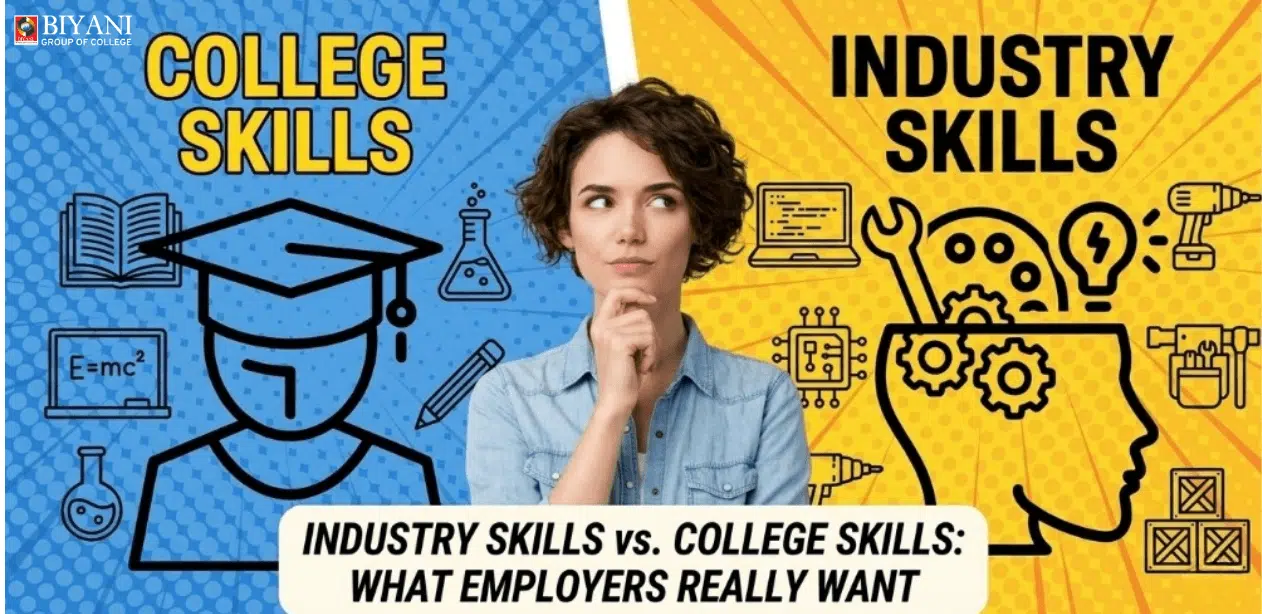
The difference between school grades and job performance often shows up in areas. Here is a comparison of what schools look for and what bosses actually look for in job interviews and performance reviews:
| Core Focus Area | What College Teaches & Rewards | What Industry Demands & Evaluates |
|---|---|---|
| Problem Solving | Theoretical, well-defined problems with a single, clear “correct” answer hidden in a textbook. | Ambiguous, multi-variable challenges with incomplete data, limited budgets, and no obvious answer. |
| Collaboration | Evenly divided group projects where work is segregated, often sabotaged by unequal individual effort. | Cross-functional, highly collaborative teamwork across departments, time zones, and varying priorities. |
| Communication | Long-form academic essays, highly technical theses, and verbose explanations designed to hit word counts. | Hyper-concise executive summaries, clear action-oriented communications, and data-driven decks. |
| Speed & Execution | Generous, predictable multi-month semester timelines with rigid, pre-planned milestone schedules. | Agile sprints, rapid prototyping, changing priorities, and shifting, competitive deadlines. |
| Failure Tolerance | Punitive grading systems where errors permanently damage a cumulative GPA and student ranking. | Psychological safety, failing fast, iterating quickly, and analysing post-mortems to pivot strategy. |
1. Technical Fluency vs. Theoretical Frameworks
In college, engineering or computer science students spend months learning about the math behind how algorithms work. This knowledge is really valuable.. When a software company hires a developer they expect them to know things like Git write good code using Docker and use cloud services like AWS or Azure right away.
It’s the same in fields like marketing, design and media. Students might learn about consumer behaviour or the history of communication. A digital marketing agency wants someone who can work with advertising budgets test different versions of web pages and understand data, from Google Analytics or HubSpot. Employers care more about knowing tools and getting things done than being able to talk about big ideas.
2. The “Soft” Skills: Emotional Intelligence & Corporate Politics
The things that are really tough to learn in a classroom are often the things that are really important for doing well in a career. When you are in college you usually work with people who are about the same age as you have similar backgrounds and are studying the same things.
This creates a kind of bubble that’s very different from the real world of work. In a job you have to be able to talk to all sorts of people like bosses who’re hard to please teams that work on products companies that sell you things and customers who are not happy. To be successful you need to be able to understand people and get along with them. This is called intelligence.
It means you can figure out what people are really thinking, work with people who want things deal with conflicts in a good way and convince people to like your ideas even if they do not think the same way as you. In college you learn how to write for your teacher. But in the world you have to be able to communicate with a lot of different people it is, like a whole system.
3. Embracing Ambiguity and Navigating Chaos
The biggest change for people who just graduated is that there is no plan to follow in the world. When you are in school you know what to do: you read what the teacher assigns you do the homework and you study for the test. If you do all of that you will get a grade. Everything is very straightforward.
In the business world things are not so clear. The market can change suddenly. The company might cut the budget without telling you. People preferences can also change overnight. Your boss might give you a task that’s not very specific like: “Find out why more customers, in the Midwest stopped buying from us this quarter and come up with a plan to fix it.” There is no book that tells you how to do it.
How to Bridge the Gap: A Blueprint for Career Success
If you are a student or a recent graduate or a professional looking to change careers finding out that higher education has left you with gaps is not a reason to worry it is an opportunity to move forward. By taking charge of your skill development you can build a profile that stands out to hiring managers at companies.
1. Build a Public and Tangible Portfolio
Having degrees and certifications is basic now they show you attended classes.
- If you are a marketer you should. Grow your own newsletter or run paid ad campaigns for a local small business.
- If you are a designer you should publish case studies on Balance that explain your thinking process for user experience and user interface design.
2. Cultivate Self-Directed Learning Habits
You should not wait for a school to teach you what is currently relevant in your field of work. You can use websites like Coursera, Udemy and industry bootcamps and official documentation to learn the tools used in your target field. You should make learning a part of your routine every week.
3. Seek Out Real-World Work Pressure
working as an intern or doing part-time freelance work and working on projects they are like real jobs are more valuable than spending more time in a classroom. You should look for opportunities where your work has consequences like strict deadlines and actual clients who are paying you. If you can handle the pressure of work early on you will become a mature professional much faster and this will help you in your career, as a professional.
Conclusion: The Ultimate Enterprise Skill
At the end of the day employers are not looking for people who’re perfect at taking tests or know everything. They want people who can solve problems in a way and help the company make money. College gives you the ideas and words you need to get started.. It is up to you to learn the skills you need to actually do the job well. If you focus on making a difference and being able to adapt to new situations you will become very valuable to the company. You will change from someone who has no experience into someone who’s really important, to the company, a corporate asset.
Author
Ms.Shbna Ali
Assistant Professor,Department of CS & I.T.
Biyani Group Of Colleges,Jaipur