
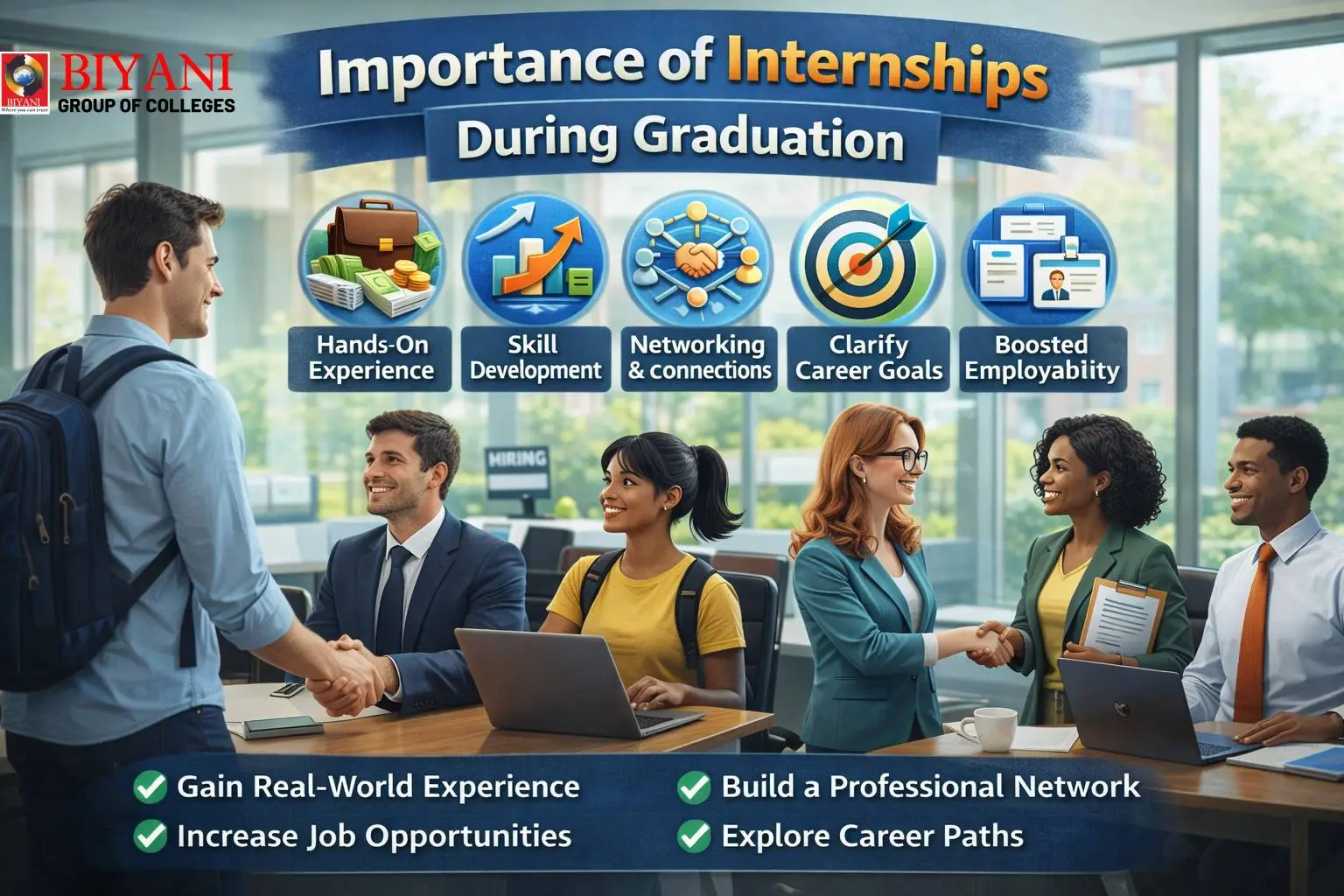
In today’s academic and professional environment, internships have become a crucial part of graduation. Learning is no longer restricted to classrooms and theoretical knowledge. Employers expect students to gain practical experience and industry exposure before completing their degrees. Internships help bridge the gap between academic learning and real-world experience.
Internships during graduation help students gain real insight into how industries function and how organizations operate in the real world. They offer a valuable platform to apply classroom learning to practical situations, enhancing both skills and confidence. Thus, internships are not merely optional experiences but vital stepping stones toward building a successful career. If you are looking for a college that provides quality education along with practical training and industry exposure, Biyani Girls College stands out as an excellent choice.
Introduction to Internships
An internship is a short-term work experience offered by organizations to students for a fixed period, usually during summer vacations or academic breaks. Internships can be full-time or part-time and may be paid or unpaid.
The main objective of internships is to provide practical exposure. For example, a BBA student interning at a marketing firm learns how marketing strategies work in real business situations. Similarly, a computer science student working in a software company understands how coding projects are implemented professionally.
Practical Exposure and Learning
One of the biggest advantages of internships is practical learning. Students study concepts and theories in classrooms, but internships allow them to observe how these ideas are applied in real business environments.
For instance, a commerce student may learn accounting concepts academically, but during an internship at an accounting firm, they understand how financial statements are prepared, taxes are handled, and audits are conducted.
This real-world exposure enhances understanding and builds confidence.
Skill Development and Professional Growth
Internships help students develop both technical and soft skills such as:
- Problem-solving skills
- Teamwork
- Communication skills
- Time management
- Professional ethics
Students learn workplace behavior, accountability, punctuality, and professionalism — lessons that cannot be fully learned through textbooks.
Additionally, internships build technical expertise. For example:
- A digital marketing intern learns SEO, social media marketing, and analytics tools.
- A finance intern learns financial analysis and reporting.
These skills significantly increase employability.
Career Clarity and Decision-Making
Many students feel uncertain about their career paths after graduation. Internships allow them to explore different industries and identify their interests.
A management student interested in marketing may discover during an internship whether marketing truly suits them or whether finance or HR is a better option.
Internships help students understand their strengths, weaknesses, and long-term career goals.
Building Professional Network
Internships provide opportunities to connect with professionals, mentors, and colleagues. These connections can lead to career guidance, references, and even job opportunities.
Building a professional network gives students a strong advantage in the competitive job market.
Enhancing Resume and Employability
Employers today look for candidates who possess both academic knowledge and work experience. A resume that includes internship experience reflects initiative, responsibility, and a willingness to learn.
Internships prepare students to become job-ready before graduation and significantly improve employability.
Understanding Workplace Culture
Internships introduce students to real workplace environments. They observe meetings, reporting structures, teamwork, and professional communication styles.
This exposure helps students understand workplace expectations and makes their transition into full-time employment smoother and less intimidating.
Confidence Building and Personality Development
Internships play a major role in building confidence and personality. Completing tasks, meeting deadlines, and receiving feedback from supervisors boosts self-confidence.
Students gradually develop maturity, discipline, and professional behavior, which positively shapes their personality.
Financial Awareness and Work Ethics
Some internships offer stipends, giving students a sense of financial responsibility and independence. Even small earnings help students understand the value of money and effort.
Internships also teach essential work ethics such as honesty, commitment, accountability, and dedication.
Competitive Advantage in Higher Studies
Internship experience strengthens applications for higher education programs such as MBA or postgraduate courses. It demonstrates practical exposure and clarity of career goals.
Reputed institutions prefer candidates who combine academic excellence with industry experience.
Challenges of Internships
Despite their benefits, internships may present challenges such as:
- Unpaid internships
- Balancing academics and work
- Performing basic tasks initially
However, even simple tasks contribute to learning. The primary goal of internships is gaining experience rather than earning money.
Balancing Academics and Internships
Students must manage their time effectively to balance academic responsibilities and internships. Proper planning helps students gain maximum benefits without affecting academic performance.
Frequently Asked Questions (FAQs)
Q.1. Why are internships necessary before graduation?
Ans.: Internships bridge the gap between academic learning and real-world application. Students gain practical skills, professional behavior, industry exposure, and employer expectations.
Q.2. How do internships improve career opportunities?
Ans: Internships provide work experience, enhance resumes, develop communication and teamwork skills, and help students build professional networks that may lead to job opportunities.
Q.3. What challenges do students face during internships?
Common challenges include balancing studies with work, unpaid roles, and performing basic tasks. Proper planning, discipline, and a learning mindset help overcome these challenges.
Conclusion
Internships have become an essential component of graduation in today’s competitive world. They provide practical exposure, skill development, career clarity, and professional networking opportunities.
Internships help students transform theoretical knowledge into practical expertise while building confidence and professionalism. Although challenges such as time management may arise, the long-term benefits far outweigh the difficulties.
Internships during graduation are not merely extracurricular activities but vital steps toward building a strong professional future. Students who actively participate in internships become better prepared, confident, and competent professionals.
Author
Dr. Surbhi Mittal
Assistant Professor,
Department of Commerce & Management
Biyani Group of Colleges, Jaipur