
Polycystic Ovarian Disease (PCOD) is becoming a major public health issue in India. Therefore, it is essential to look beyond treatment and focus on early diagnosis and timely management, which play a crucial role in long-term health outcomes. PCOD affects nearly 10–15% of women of reproductive age. Although the diagnosis may feel overwhelming, PCOD is a manageable condition that responds well to informed medical care and lifestyle modifications.
For students interested in health and life sciences, enrolling in one of the best bsc college can provide a strong academic foundation to understand women’s health issues in depth.
What is PCOD?
PCOD is a hormonal disorder that arises when the ovaries produce insufficient or non-existent eggs. These eggs may eventually develop into tiny cysts along the outer surface of the ovaries. The condition is characterized by ovarian dysfunction, hormonal imbalance, and metabolic disturbances that affect healthy reproductive functioning.
PCOD significantly impacts menstrual regularity, fertility, and overall metabolic health. One of the major hormonal changes seen in PCOD is an increase in testosterone levels, which can disrupt normal menstrual cycles. Although PCOD is often confused with Polycystic Ovarian Syndrome (PCOS), both conditions are different. PCOD mainly involves excess immature follicles, while PCOS is a more severe systemic endocrine disorder.
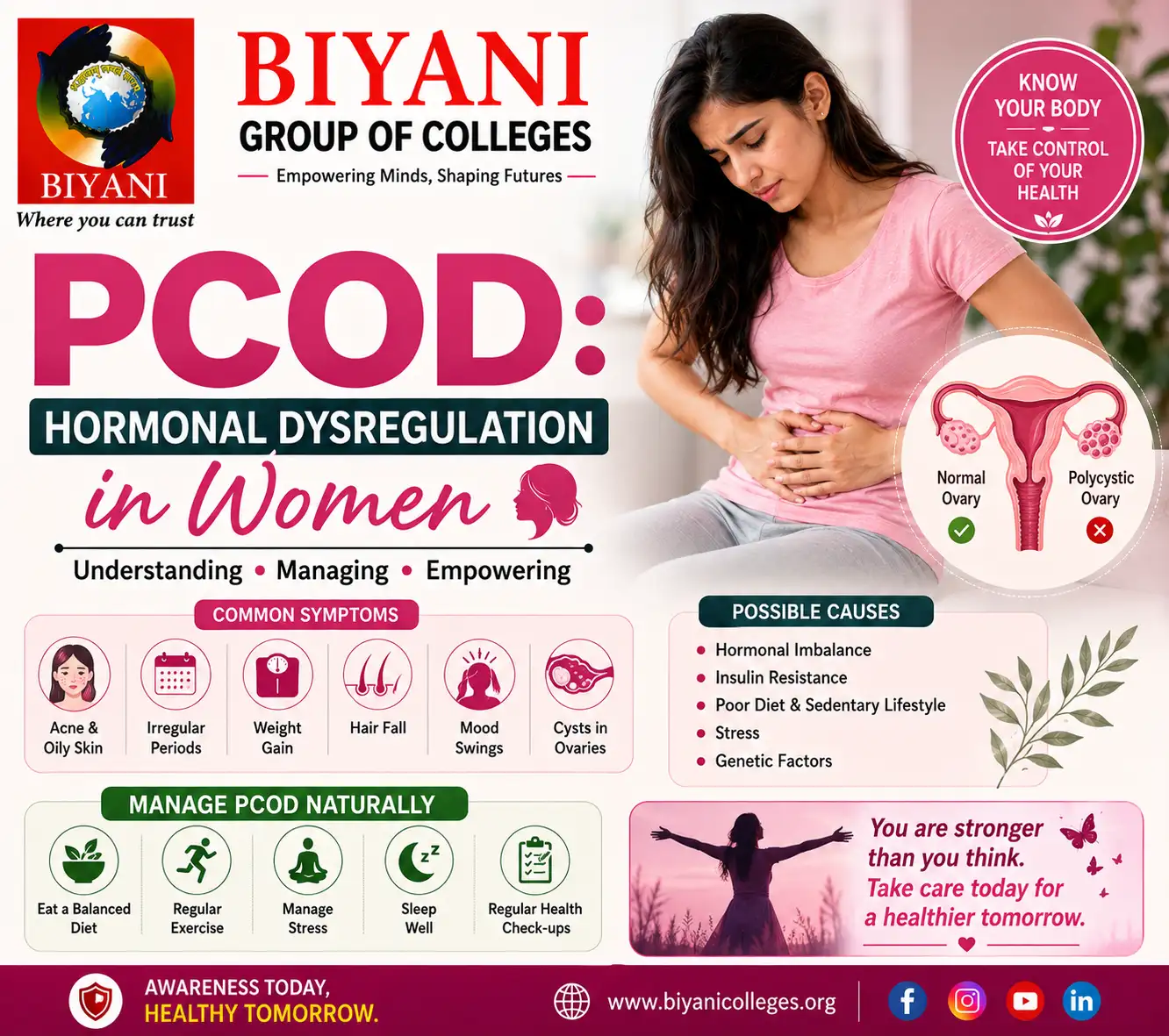
Pathophysiology of PCOD
PCOD primarily results from dysfunction of the hypothalamic–pituitary–ovarian (HPO) axis. Normally, follicle-stimulating hormone (FSH) promotes follicular maturation, while luteinizing hormone (LH) triggers ovulation. In PCOD, an abnormal LH:FSH ratio—usually elevated LH levels—stimulates excessive androgen production by ovarian theca cells.
This hyperandrogenism interferes with normal follicular development, causing follicles to arrest at an immature stage. These underdeveloped follicles accumulate within the ovaries, creating the characteristic polycystic appearance observed on ultrasound.
Insulin resistance also plays a vital role in PCOD progression. Elevated insulin levels enhance androgen synthesis and reduce the liver’s production of sex hormone-binding globulin (SHBG), thereby increasing circulating androgen levels. This creates a vicious cycle of hormonal imbalance, ovarian dysfunction, and metabolic disruption.
Causes and Symptoms
The exact cause of PCOD is still unknown. However, genetic predisposition, environmental factors, and lifestyle habits contribute significantly. Women with a family history of PCOD or metabolic disorders are at a higher risk.
- Irregular menstrual cycles: Frequent, delayed, or missed periods
- Physical changes: Excess facial and body hair (hirsutism) or persistent acne
- Weight changes: Rapid weight gain or difficulty losing weight, especially around the abdomen
- Thinning hair: Scalp hair loss resembling male-pattern baldness
PCOD vs. PCOS: A Quick Comparison
Polycystic Ovarian Disease (PCOD) and Polycystic Ovary Syndrome (PCOS) are related but distinct conditions. PCOS is a more complex hormonal disorder with serious long-term metabolic consequences, whereas PCOD is generally less severe and more manageable.
| Aspect | PCOD | PCOS |
|---|---|---|
| Nature of Condition | Ovarian disorder caused by immature egg development | Systemic hormonal-endocrine syndrome |
| Severity | Less severe and often manageable with lifestyle changes | More severe with long-term health risks |
| Hormonal Imbalance | Moderate, mainly affecting ovulation | Severe androgen imbalance with insulin resistance |
| Impact on Fertility | Fertility often restored with lifestyle management | Frequently causes anovulation requiring medical intervention |
| Treatment Approach | Lifestyle changes with limited medication | Long-term medical and hormonal management |
Effective Management Strategies
PCOD management requires consistent lifestyle changes rather than quick fixes.
1. Balanced Nutrition
- Follow a low glycemic index (GI) diet to prevent insulin spikes.
- Include lean proteins, whole grains (oats, quinoa), and green leafy vegetables.
- Limit refined carbohydrates and sugary beverages.
2. Regular Physical Activity
Exercise improves insulin sensitivity. A combination of aerobic exercise (brisk walking, swimming) and strength training is most effective.
3. Stress Management and Sleep
High cortisol levels can worsen hormonal imbalance. Prioritize 7–8 hours of sleep and practice stress-reducing activities such as meditation, stretching, or yoga.
Conclusion
PCOD is a manageable condition, not a life sentence. While it may present challenges such as irregular periods or skin concerns, it does not define a woman’s future health. With early diagnosis, proactive lifestyle choices, and medical guidance, most women can successfully regulate hormones and lead symptom-free lives.
Always consult a qualified gynaecologist or endocrinologist to develop a personalized treatment plan based on individual body chemistry.
Blog By:
Dr. Smita Sisodiya
Assistant Professor,Department of Science
Biyani Girls College, Jaipur